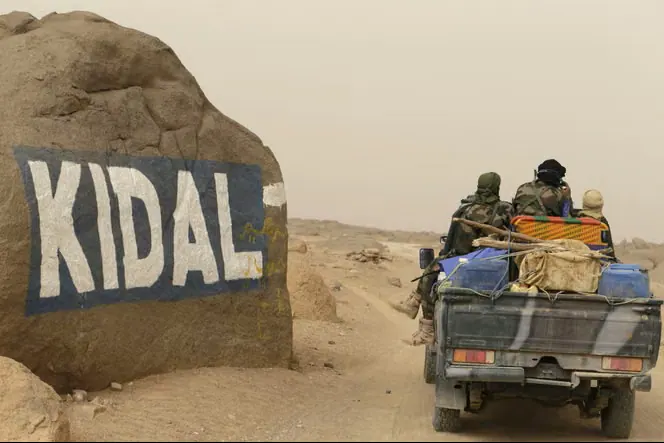
In a dramatic turn of events, the Malian army and its Russian partners have entered the city of Kidal, located in the northern region of Mali, without engaging in combat. According to reports from RFI, approximately 120 vehicles carrying Malian soldiers, Russian military personnel from the Africa Corps, and fighters from the MSA and Gatia, two Tuareg politico-military groups now integrated into the Malian Armed Forces (FAMa), left Anéfis in the morning to make their way to Kidal. This development comes after several days of military build-up in the area.
The Malian army's operation in Kidal is aimed at neutralizing armed terrorist groups, destroying their sanctuaries, and restoring security for the local population. In a statement released on Tuesday, the Malian general staff confirmed that it had launched a large-scale air and land operation in the Kidal region, in partnership with Russian forces. The objective is to bring stability to the area and ensure the free movement of people.
The Front de libération de l'Azawad (FLA), a separatist movement that controlled Kidal alongside jihadist groups affiliated with Al-Qaïda, announced its withdrawal from the city on Tuesday. The FLA described its decision as a "strategic withdrawal" aimed at preserving human life in the face of increasing risks to the remaining population. The movement stated that this withdrawal is a temporary measure to protect its human and logistical capabilities.
The FLA's withdrawal paves the way for the Malian army to retake control of Kidal without engaging in a land battle. This development has significant symbolic value for the Malian transitional authorities, as Kidal had been lost to separatist groups in April, dealing a major blow to the Malian army and its Russian partners. However, the city has been largely emptied of its inhabitants, with many fleeing in 2023 and again in April.
In the days leading up to the Malian army's entry into Kidal, the city and its surroundings were subjected to intense aerial bombardments. The Malian army reported conducting "precision strikes" and claimed to have neutralized numerous terrorists. However, the FLA disputes this account, alleging that the strikes were "blind" and targeted civilian infrastructure, including shops, homes, and a bus station used by migrants and gold miners.
The humanitarian situation in Kidal remains unclear, with reports of widespread destruction and displacement. According to RFI, it has not been possible to independently verify the impact of the recent strikes. The city's residents have borne the brunt of the conflict, with many forced to flee their homes due to the fighting.
The recapture of Kidal marks a significant turning point in the conflict between the Malian authorities and armed groups in the north. However, the coming days will be crucial in determining whether the FLA's withdrawal represents a tactical pause or a shift in the regional balance of power. The situation remains fluid, with many questions still unanswered about the future of Kidal and the wider region.
Key points
- The Malian army, backed by Russian partners, has entered Kidal without engaging in combat.
- The FLA has announced a strategic withdrawal from Kidal, citing the need to preserve human life.
- The recapture of Kidal has significant symbolic value for the Malian transitional authorities.