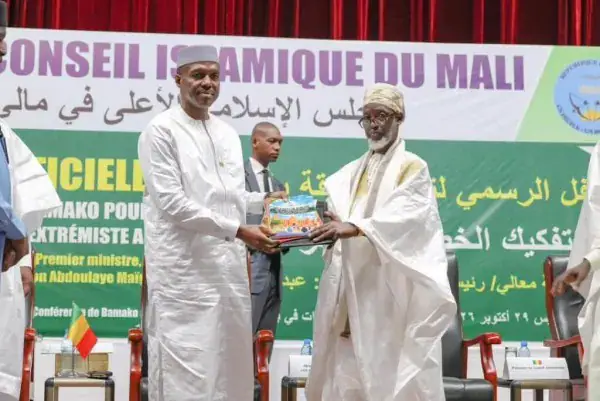
The Malian government has taken a step towards countering extremist discourse in the country's religious sphere. On Thursday, the Haut Conseil islamique, or Islamic High Council, presented a document to Prime Minister Abdoulaye Maïga aimed at combating extremist rhetoric and promoting peaceful religious dialogue. The document, titled "Document de Bamako pour la déconstruction du discours extrémiste," or "Bamako Document for Deconstructing Extremist Discourse," was handed over by Ibrahim Kontao, first vice-president of the Islamic High Council.
The Bamako Document is part of the government's efforts to involve religious leaders in preventing extremism. According to Ibrahim Kontao, the document's wide dissemination among Muslim communities is crucial. Prime Minister Abdoulaye Maïga, on behalf of Transition President Assimi Goïta, received the document and called on religious organizations, civil society, and public institutions to contribute to its implementation. The government's goal is to complement security measures with awareness-raising, dialogue, and prevention actions.
The Malian government is seeking to protect young people from hate speech, intolerance, and calls to violence. Abdoulaye Maïga emphasized the importance of shielding the youth from extremist influences. This initiative builds on the Committee for Reflection on the Prevention of Troubles in the Religious Sphere, established by the head of state. The committee aims to foster a more peaceful and inclusive religious environment in Mali.
While the full content and concrete recommendations of the Bamako Document have not been made public, its creation marks a significant step. The document is expected to guide efforts to promote moderate religious discourse and counter extremist narratives. By engaging religious leaders and communities, the government hopes to reduce the spread of extremist ideologies.
Mali has faced significant security challenges in recent years, including extremist violence. The country's authorities have sought to address these challenges through a combination of security and dialogue initiatives. The Bamako Document is part of these efforts, reflecting the government's recognition of the need for a nuanced approach to preventing extremism.
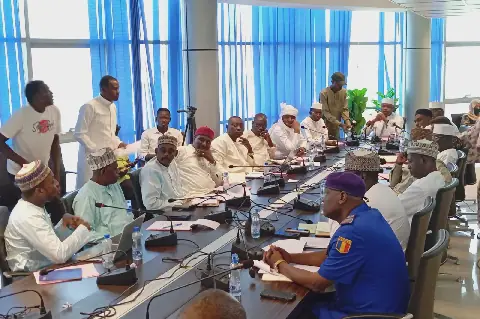
The presentation of the Bamako Document took place at the Centre international de conférences de Bamako. The event was attended by various stakeholders, including government officials, religious leaders, and civil society representatives. The involvement of these groups is seen as crucial to the document's success and the broader goal of promoting peace and stability in Mali.
The Malian government's efforts to counter extremist discourse have implications for regional and international partners. Mali's Sahel region has been a hotspot for extremist activity, and the country's approach to addressing this challenge may inform similar initiatives elsewhere. As the situation in Mali continues to evolve, the effectiveness of the Bamako Document and its implementation will be closely watched.
Key points
- The Malian government receives a document to counter extremist religious rhetoric.
- The document aims to promote peaceful religious dialogue and prevent extremism.
- The government's efforts seek to protect young people from hate speech and extremist influences.