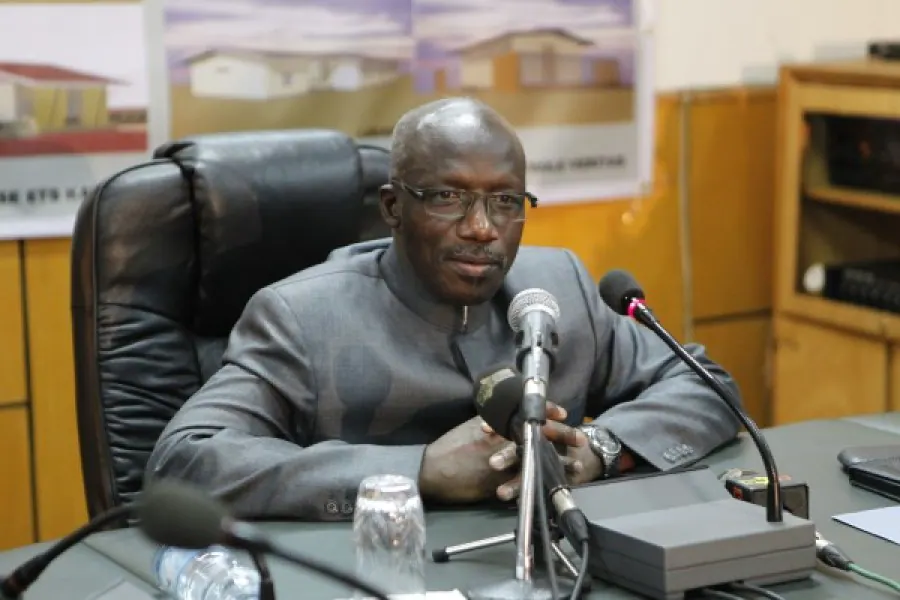
General Yamoussa Camara, Secretary Permanent of the National Security Council, recently shared his insights on Mali's security situation. He noted that prior to the Transition, Mali's defense lacked a formalized policy and coherent equipment strategy. This led to hasty acquisitions of equipment from various sources, often without consideration for interoperability. The lack of clear roles between politicians and the military further complicated matters. Camara emphasized that the country's defense strategy was often reactive, rather than proactive, in addressing identified threats.
According to General Camara, the situation has improved since the Transition. The government has regained autonomy in decision-making, and the army has been restructured with upgraded equipment. However, Camara acknowledged that significant challenges persist. The new authorities are working to address these challenges, albeit with limited resources. He praised the resilience of the Malian people, who are supportive of the government's efforts to enhance security.
General Camara discussed the acquisition of military equipment and recruitment of thousands of soldiers. While progress has been made, he emphasized that the army is not yet fully equipped to tackle the challenges of insecurity and terrorism. The general highlighted the need for a long-term approach to address the transnational nature of the threats. He stressed that a solution can only be achieved through a collaborative effort with neighboring countries and international partners.
The general noted that the security situation has improved in some areas, with a decrease in terrorist attacks. He attributed this to the increased mobility and effectiveness of the military, as well as the support of local populations. The involvement of supplementary forces, such as the "donzos," has also contributed to the relative calm. Additionally, new partners have brought their expertise and technological capabilities to support Mali's security efforts.
Despite the progress, General Camara warned that terrorist groups remain active in certain areas. He highlighted the asymmetry of the conflict, where the state must protect all sensitive areas and populations, while terrorist groups exploit vulnerabilities. To address this, Camara emphasized the need for better intelligence gathering and information sharing, as well as increased involvement from local populations.
General Camara discussed the importance of regional cooperation in addressing the security challenges. He noted that the Alliance of Sahel States (AES) offers a platform for collaboration and mutual support. By working together, countries in the region can pool their resources and expertise to tackle the root causes of terrorism. Camara expressed optimism that with sustained efforts and cooperation, Mali and its partners can make significant progress in securing the region.
In conclusion, General Camara emphasized that Mali's security situation is complex and multifaceted. While progress has been made, significant challenges remain. He stressed the need for continued support from local populations, as well as international partners, to address the root causes of terrorism. By working together, Mali can build a more stable and secure future.
Key points
- Mali's security situation has improved since the Transition, with a restructured army and upgraded equipment.
- The country still faces significant challenges in addressing terrorism and insecurity.
- Regional cooperation and collaboration are essential in tackling the root causes of terrorism in the Sahel region.