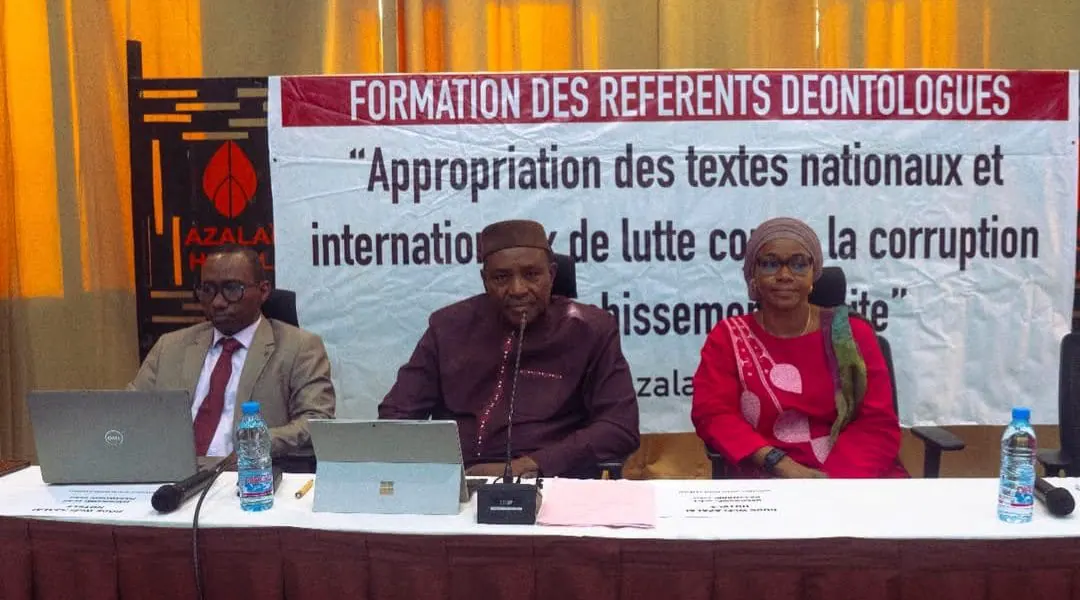
The Office Central de Lutte contre l'Enrichissement Illicite (OCLEI) in Mali has taken a proactive approach to fighting corruption by training referents from various ministries and central services. The training, which took place on October 1-2, 2026, in Bamako, aims to equip these officials with the knowledge and skills to promote integrity and prevent corruption within their respective departments. The initiative is part of OCLEI's strategy to tackle corruption from within.
The training program covered topics such as the Convention of the United Nations, National Strategy, and the 2014 law on illicit enrichment. Experts from OCLEI, including Professor Mahamane Coulibaly and Secretary General Djibril Soumbounou, led the sessions. The goal is to create a network of "sentinels of probity" who can promote a culture of transparency and accountability within the government. Ibrahim Kalil Sako, representing the President of OCLEI, emphasized the importance of building an administration where transparency and redevability are not just empty words.
The OCLEI's approach is a shift from its traditional role as a repressive body that tracks down unjustified wealth. By empowering internal referents, the institution aims to prevent corruption from arising in the first place. However, the effectiveness of this initiative depends on the ability of these referents to operate within a system where corrupt practices are often entrenched. The challenge lies in ensuring that these officials have the necessary support and protection to carry out their duties without fear of reprisal.
One of the key strategies of OCLEI is to create a network of referents who can support and protect each other. This network is designed to break the isolation of individual agents who may face pressure or retaliation from their superiors. By connecting these referents, OCLEI hopes to create a robust system for promoting integrity and preventing corruption. The institution's goal is to make this network a reliable and effective tool for promoting change.
The success of this initiative will depend on the level of support and protection provided to the referents. It is crucial that they receive institutional backing from the highest levels of government to ensure their safety and effectiveness. Without this support, the risk is that these referents may become mere figureheads, unable to effect meaningful change. The October 2026 training session is just the beginning, and OCLEI must continue to provide ongoing support to its referents.
The Malian government's commitment to fighting corruption is critical to the success of this initiative. Corruption is a deeply ingrained problem in the country, and it will require a sustained effort to overcome. The OCLEI's approach is a step in the right direction, but it will require careful monitoring and evaluation to ensure that it is having the desired impact. The stakes are high, and the consequences of failure are significant.
The training of referents is a critical component of OCLEI's strategy to promote integrity in government. By equipping these officials with the knowledge and skills they need, OCLEI is taking a proactive approach to fighting corruption. The coming months and years will be crucial in determining the effectiveness of this initiative and its impact on the Malian government's efforts to promote transparency and accountability.
Key points
- The OCLEI's training program aims to equip government officials with the knowledge and skills to promote integrity and prevent corruption within their respective departments.
- The effectiveness of the initiative depends on the ability of the referents to operate within a system where corrupt practices are often entrenched.
- The OCLEI's goal is to create a network of referents who can support and protect each other in promoting integrity and preventing corruption.