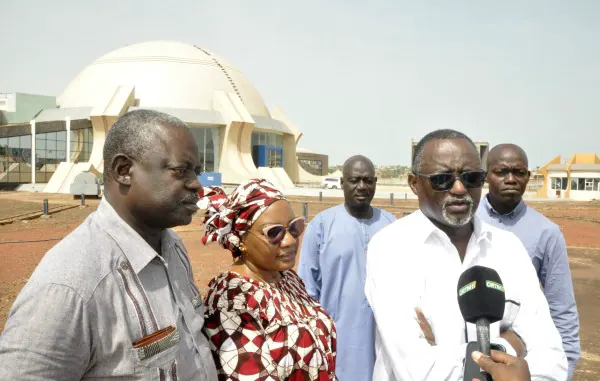
The new parliament building of the West African Economic and Monetary Union (UEMOA) has been completed in Bamako, Mali. The building, designed to accommodate the community's parliament, features a hemicycle, 150 offices for parliamentarians, administrative services, and several common areas. According to Sékou Coulibaly, director of the Agence d'exécution des travaux d'intérêt public pour l'emploi (Agetipe-Mali), the project demonstrates Mali's capacity to lead large-scale infrastructure projects. The building's design and construction reflect the country's expertise in the field.
The Agetipe-Mali agency played a crucial role in the project's execution, overseeing procedures, technical and administrative implementation, and financial management. Coulibaly emphasized that the agency's experience in managing large projects will encourage better utilization of national expertise in the future. The project's success is seen as a testament to Mali's capabilities and a symbol of regional integration. The building's location in Bamako reflects the trust placed in Mali and will serve as a tool for regional integration.
The project highlights the importance of national expertise in the realization of large-scale investments. Coulibaly called for greater recognition of the role of national structures in the execution of public policies. He believes that the experience gained through this project should be leveraged to strengthen the use of national competencies and improve the efficiency of public investments. The project's success is expected to inspire confidence in Mali's ability to manage complex projects.
The UEMOA parliament building is not only an architectural achievement but also an institutional and symbolic one. Its construction demonstrates the capabilities of Mali's national structures in managing large-scale projects. The building's design and features reflect the needs of the parliament and its members. According to Coulibaly, the project's success is a source of pride for Mali and a demonstration of its expertise.
The project's execution involved various stakeholders, including the UEMOA, Agetipe-Mali, and other national and international partners. Coulibaly thanked the UEMOA for the trust placed in Agetipe-Mali and expressed hope that the agency's expertise will be mobilized for future projects. The project's success is seen as a model for future collaborations between national structures and international organizations.
The completion of the UEMOA parliament building is a significant milestone for Mali and the region. The building will serve as a hub for regional integration and cooperation. According to Coulibaly, the project's success is a testament to the capabilities of Mali's national structures and a demonstration of the country's expertise in managing large-scale projects.
The project's impact is expected to be felt beyond Mali's borders. The UEMOA parliament building will serve as a symbol of regional integration and cooperation, inspiring other countries to follow suit. The project's success will also encourage greater recognition of the role of national expertise in the realization of large-scale investments.
Key points
- The UEMOA parliament building showcases Mali's national expertise in managing large-scale infrastructure projects.
- The project's success demonstrates the capabilities of Mali's national structures in managing complex projects.
- The building's completion is a significant milestone for regional integration and cooperation in West Africa.