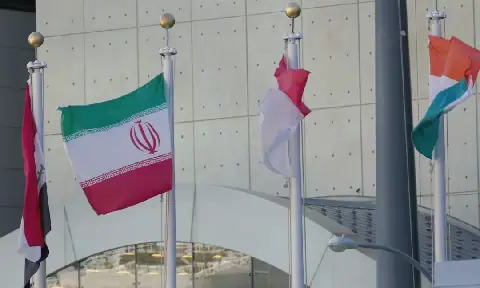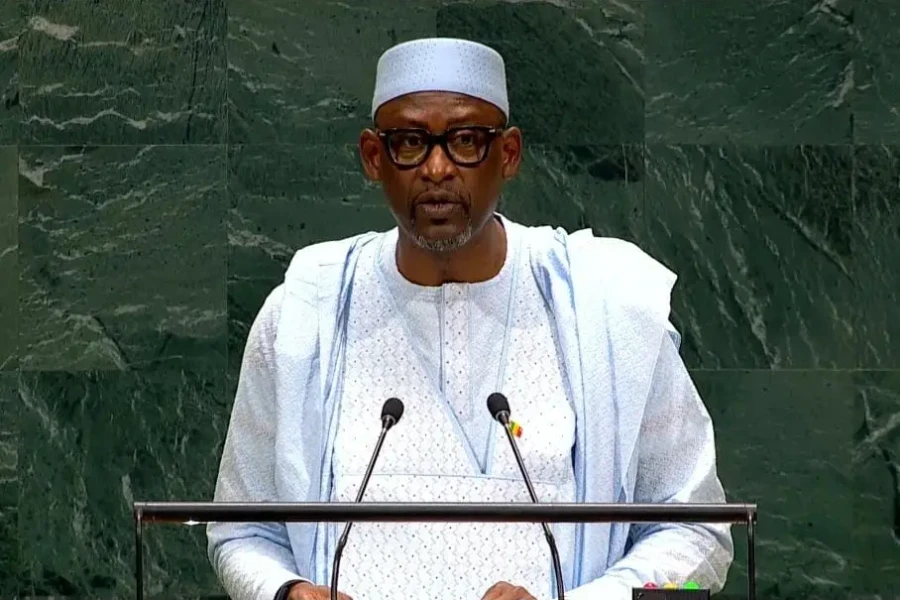
On September 28, 2026, Mali's Minister Diop delivered a statement at the 81st session of the United Nations General Assembly, representing the country's President, Assimi Goita. Diop congratulated the Assembly's President on his election and expressed Mali's cooperation throughout his term. He also acknowledged the previous president's remarkable leadership and thanked UN Secretary-General António Guterres for his decade-long commitment to peace, development, and human rights.
Diop highlighted Mali's admission to the UN on September 28, 1960, six days after gaining independence, with the support of Tunisia and Ceylan (now Sri Lanka). He welcomed the 81st session's theme, "Restaurer la confiance, accompagner les transformations: une Organisation des Nations Unies au service de tous" ("Restoring trust, accompanying transformations: a United Nations in service of all"). This theme is particularly relevant in today's international context, marked by multiple crises and challenges to multilateralism.
The Malian Minister reaffirmed his country's commitment to a reformed multilateralism based on the strict respect of the UN Charter's principles, including sovereign equality, territorial integrity, non-interference, and non-use of force. He warned that deviating from these principles would lead to cycles of conflict. Diop criticized the selective application of international law, the use of coercion, and the policies of hegemony and domination that have eroded trust in international institutions.
Diop called for the lifting of unilateral coercive measures that harm states' sovereignty and threaten the lives and well-being of populations in over thirty countries. He also criticized the UN's slow response to crises, citing the Sahel region's decade-long security crisis, triggered by NATO's military intervention in Libya in 2011. This intervention has led to the spread of terrorism and violent extremism in the region.
The Malian government welcomes the strategic review of the UN's regional office for West Africa and the Sahel, aiming to develop a more effective approach to address the region's concerns. Diop condemned international terrorism and its state sponsors, which finance, arm, and provide logistical support to terrorist groups. He specifically mentioned Ukraine's public support for terrorist groups operating in the Sahel, which has been corroborated by independent sources.
Diop denounced Ukraine's actions as inacceptable, particularly given its own claims to defend its territorial integrity. He argued that the international community, especially Africa, cannot remain silent in the face of Ukraine's aggression, which has significant consequences for African countries and beyond. Diop suggested that Ukraine's actions are part of a broader strategy to destabilize countries and undermine their emancipation from colonial tutelage.
The Malian Minister outlined the various forms of terrorism, including armed attacks on civilians and security forces, economic warfare, and media disinformation. He cited recent coordinated attacks in Mali on April 25 and July 4, 2026, which resulted in numerous casualties, as evidence of the growing connection between terrorist groups.
Key points
- Mali's Minister Diop calls for a reformed multilateralism based on the UN Charter's principles.
- Diop criticizes unilateral coercive measures and the selective application of international law.
- Mali condemns international terrorism and its state sponsors, particularly Ukraine's support for terrorist groups in the Sahel.