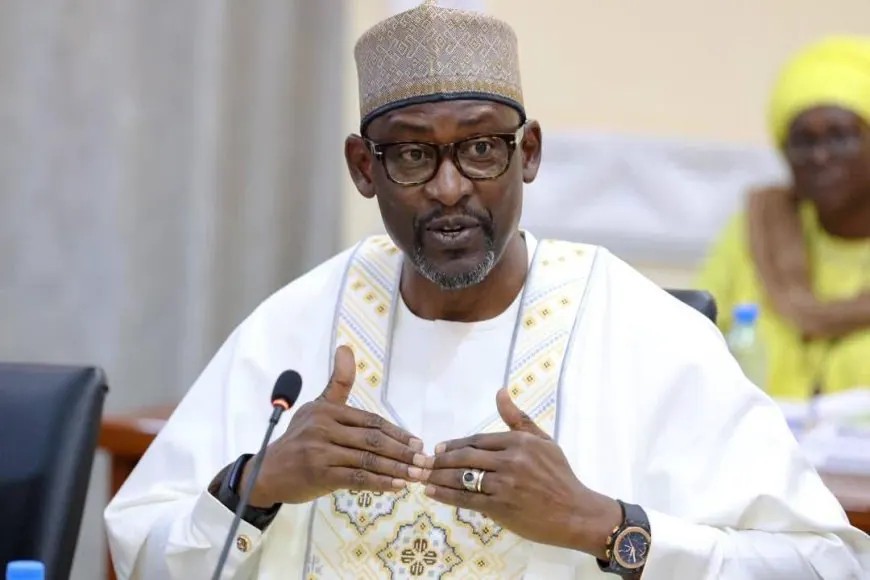
On October 1, 2026, Mali's Minister of Foreign Affairs and International Cooperation, Abdoulaye Diop, addressed the 81st session of the United Nations General Assembly on behalf of President of the Transition, General Assimi Goïta. In his speech, Diop presented a clear and resolute stance, emphasizing Mali's autonomy and sovereignty. According to Dr. Ahmadou Touré, director of the Center for Research on Governance, Mediation, and Security in the Sahel, Diop's address marked a significant departure from traditional diplomatic norms.
Dr. Touré analyzed Diop's intervention as a strong condemnation of external interference in the Sahel region and a challenge to the traditional multilateral approach. The minister's speech highlighted the threat posed by external actors, citing Ukraine's support for terrorist groups operating in the Sahel. Diop also recalled the recent attacks in Mali, including the tragic ambush that killed the Minister of Defense and Veterans, General Sadio Camara. Dr. Touré sees these events as evidence of the exogenous threat facing the region.
The expert noted that Diop's speech targeted the inertia and "complicit silence" of many African capitals, which prioritize a predetermined diplomatic narrative over supporting Sahelian populations on the front lines. Dr. Touré emphasized that the minister's address represents a frontal rupture with traditional multilateral rules, particularly within the United Nations. Mali, according to Dr. Touré, is contesting a settlement that undermines its sovereignty.
Dr. Touré highlighted the new strategic approach outlined by Diop, which emphasizes autonomy and national responsibility. The minister reaffirmed that international aid has never developed a country and instead proposed a model based on mobilizing domestic resources, local transformation of mining wealth, and massive investment in youth and artificial intelligence. This approach is reflected in the recent creation of the Mali Artificial Intelligence and Robotics Center, initiated by General Assimi Goïta.
However, Dr. Touré cautioned that the success of this approach depends on the state's ability to secure and control its territory. He noted that the true test of Mali's strategy lies in its capacity to address the challenges posed by terrorist groups and external interference. The expert emphasized that the international community, particularly the UN, must adapt to the changing dynamics in the Sahel region.
Dr. Touré outlined three possible outcomes for the region and its partners. If Africa fails to respond to Mali's appeals, the Confederation of Sahel States may need to consolidate its structures unilaterally. Alternatively, if the UN reforms its Security Council and UNOWAS, it may have an opportunity to address the Sahel region's concerns more effectively. Finally, if the Sahel Confederation fails in its mission, no international forum can change the outcome.
In conclusion, Dr. Touré emphasized that Mali, through Diop's speech, has presented a clear and unequivocal contract: it is now up to Africa to respond to the imperatives of continental solidarity and the UN to demonstrate its commitment to protecting the populations it has failed to safeguard. The international community must take Mali's concerns seriously and work towards a more effective and inclusive approach to addressing the region's challenges.
Key points
- Mali's Foreign Minister Abdoulaye Diop calls for a new approach to international cooperation, emphasizing national sovereignty and autonomy.
- Dr. Ahmadou Touré analyzes Diop's speech as a significant departure from traditional diplomatic norms, emphasizing the threat posed by external interference in the Sahel region.
- The success of Mali's new strategic approach depends on its ability to secure and control its territory, and the international community's response to its appeals.