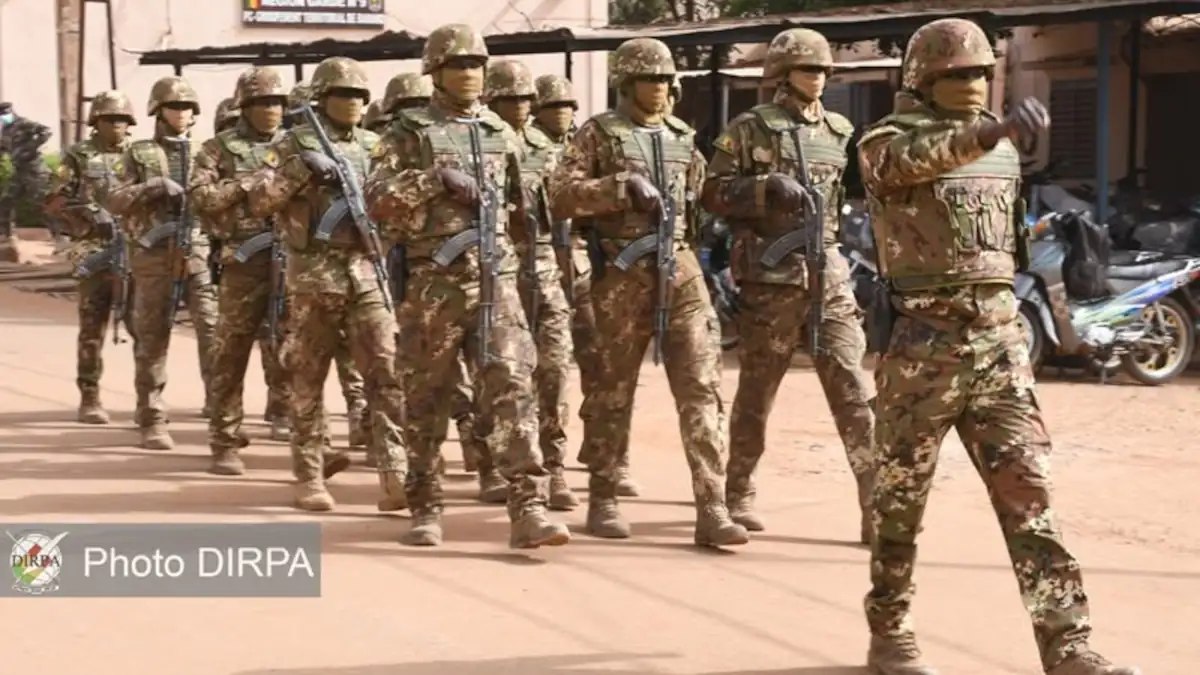
The Malian army, known as Forces armées maliennes (FAMa), has regained control of Kidal, a city in northern Mali, for the second time in less than three years. On October 6, 2026, FAMa entered the city without encountering resistance, five months and eleven days after it was seized by the Front de libération de l'Azawad (FLA). The FLA, allied with the Groupe de soutien à l'islam et aux musulmans (Jnim), had taken control of Kidal from Bamako in April 2026.
According to sources, the FAMa entered Kidal without a fight, following aerial strikes. The Malian army's general staff announced that it had launched a large-scale operation, dubbed "Dougoukoloko," in collaboration with Russian partners. The goal is to neutralize armed groups and restore the free circulation of people and goods. The FLA, on the other hand, announced a "strategic and controlled withdrawal," stating that October 5 strikes had "destroyed most public and civilian infrastructure."
The FLA's withdrawal marks a victory for the FAMa, but the Malian army now faces new challenges. To maintain control of Kidal, the army must ensure a steady supply of the city and protect the routes leading to it. The International Crisis Group noted in May that the FLA, despite its alliance with Jnim, had demonstrated its ability to strike, while relying on its partner whose objectives differ from its own.
The crisis group also reported that the Burkina Faso and Niger may have supported the Malian army's efforts. According to sources, Burkina Faso participated in strikes in the Kidal region, while Niger provided support near the common border. This development comes as Mali's transitional president had recently stated that the country remains open to dialogue, particularly with Algeria, with which Bamako has renewed its cooperation.
The recapture of Kidal marks the third change of hands in the city since November 2023. The city's fate has significant implications for the region, and the manner in which the Malian army maintains control will be crucial. The FAMa must now focus on securing the city and its surroundings, while also addressing the root causes of the conflict.
The Malian government's efforts to restore control over Kidal and other regions have been ongoing, with varying degrees of success. The FLA's takeover of the city in April 2026 was a significant setback for the government, but the recent recapture demonstrates the military's determination to assert its authority. However, the challenges ahead should not be underestimated, as the region remains volatile and armed groups continue to pose a threat.
As the Malian army consolidates its control over Kidal, the international community will be watching closely. The country's transitional government has faced criticism for its handling of the conflict, and the success or failure of its military efforts will have significant implications for the region. The government's commitment to dialogue and cooperation with neighboring countries, such as Algeria, will also be crucial in determining the long-term stability of the region.
Key points
- The Malian army has regained control of Kidal, but faces new challenges in maintaining security and stability in the region.
- The city's recapture marks the third change of hands in less than three years, highlighting the volatility of the region.
- The Malian government must now focus on securing the city and its surroundings, while addressing the root causes of the conflict.