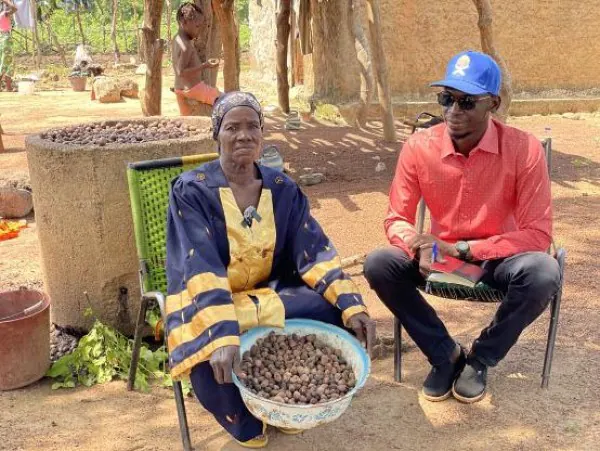
In the Djitoumou region of Mali, the Karité season, which typically begins in June, marks the start of an important activity for many women. They venture into the countryside at dawn and dusk to collect Karité nuts, which are then sorted, cleaned, boiled, and dried in the sun. This labor-intensive process is a vital part of the Karité production cycle, and women play a central role in it. The collected nuts are stored in outdoor pits, awaiting further processing.
After the initial processing, the dried Karité nuts are decorticated, and the amandes are set aside for transformation into butter. This crucial step involves crushing and grinding the amandes into a paste, which is then worked until the butter is obtained. While many women still use traditional methods, some have started to adopt modern equipment to reduce manual labor and increase production. This blend of traditional techniques and modern technology is essential to the Karité industry in Djitoumou.
For Minata Samaké, a Karité producer from Ouéléssébougou, the transformation of Karité into butter represents not only a traditional activity but also a vital source of income for many women. The butter is used by families, but it is also sold in local markets, providing essential revenue for households. This income enables women to cover daily expenses, purchase condiments, school supplies, clothing, and invest in other economic activities.
The commercialization of Karité butter and amandes is the final stage of the production process. In local markets, the products are sold to traders and sometimes to buyers from other areas. The prices vary depending on the period, quantity available, and demand. Currently, the kilogram of Karité butter is sold for around 1,000 Fcfa in local markets. This income contributes significantly to the well-being of households in the region.
The Karité industry in Djitoumou also faces challenges, including the need for modernization and industrialization. Minata Samaké appealed to authorities, partners, and organizations to support the industrialization of the Karité sector in the region. This would create more jobs and promote the autonomy of rural women, who play a crucial role in the industry.
The Karité sector is an essential part of the economy in Djitoumou, and its impact extends beyond the economic sphere. It also has social and cultural implications, as it provides a platform for women's empowerment and community development. Efforts to support and develop the Karité industry could have a positive impact on the lives of many women and their families.
As the Karité season progresses, women in Djitoumou will continue to work tirelessly to collect, process, and sell Karité products. Their efforts will not only provide them with a vital source of income but also contribute to the local economy and community development. With the right support and investment, the Karité industry in Djitoumou has the potential to grow and thrive, benefiting many women and their communities.
Key points
- The Karité industry provides a crucial source of income for many women in Djitoumou, Mali.