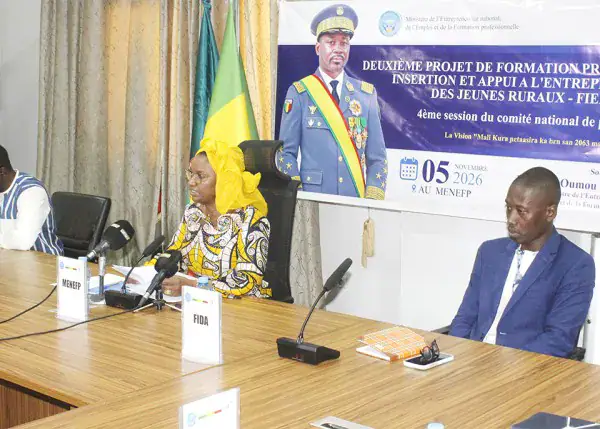
The Malian government's FIER II program aims to address financial and operational constraints in rural areas, with a focus on vocational training and functional literacy for 8,000 young people, including 40% women. The program also targets financing for 3,744 income-generating activities and 1,308 rural microenterprises. Minister Oumou Sall Seck emphasized that FIER II is a strategic instrument for combating unemployment in rural areas, with the goal of creating opportunities for entrepreneurship and wealth creation.
Despite its ambitions, FIER II faces significant funding challenges, with a deficit estimated at 23.563 billion fcfa. This shortfall threatens the program's implementation, particularly the deployment of an aggregative approach that aims to group young people around promising sectors and productive infrastructure. Minister Seck has called for concerted efforts to mobilize complementary funding in 2027 to support the program's objectives.
The 2026 exercise revealed some progress, including initial financing for young people, deployment of targeting operators, and advancements in establishing a sustainable financing mechanism. However, execution rates for the PTBA remain low, at 40% financially and 52% physically. These delays are attributed to approval procedures, recruitment of service providers, and feasibility studies for infrastructure.
Lamine Diassana, national coordinator of the project, reported that around 1,600 young people have been supported in their installation, with technical and entrepreneurial training, and connections to partner financial institutions for financing their initiatives. The program's success will ultimately be measured by the number of activities created, income generated, and sustainable jobs established.
The FIER II program has the potential to transform rural areas into hubs of opportunity and entrepreneurship. However, addressing the funding gap is crucial to achieving its objectives. The government and stakeholders must work together to mobilize resources and ensure the program's effective implementation.
The program's focus on vocational training and functional literacy aims to equip young people with the skills needed to succeed in the workforce. By supporting income-generating activities and microenterprises, FIER II also seeks to promote economic growth and job creation in rural areas.
Ultimately, the success of FIER II will depend on the effective mobilization of resources and the concerted efforts of stakeholders to support its objectives. With a focus on sustainable development and job creation, the program has the potential to make a positive impact on the lives of young people in rural Mali.
Key points
- FIER II program faces funding challenges with a deficit estimated at 23.563 billion fcfa.