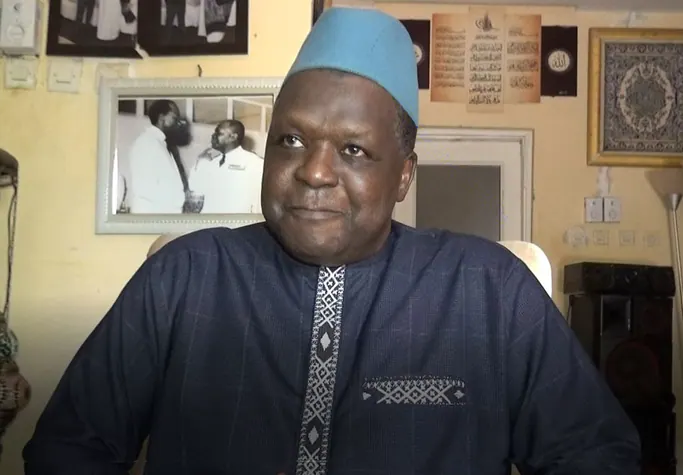
Former Malian ambassador to Türkiye and international strategy analyst, Birahim Soumaré, has outlined the principles of a diplomatic approach that prioritizes national interests and freedom of decision. In a recent statement, Soumaré emphasized that Mali's diplomatic efforts should focus on defending national interests and diversifying partnerships. This approach aims to enable Mali to work with various states without compromising its priorities. Soumaré's comments provide insight into Mali's diplomatic strategy and its implications for the country's international relations.
According to Soumaré, Mali's diplomatic approach is built on mutual respect, sovereignty, non-interference, and the pursuit of common interests. The primary goal of diplomacy is to create conditions that allow the country to defend its security, development, and international standing. This cooperation should remain open and non-exclusive, enabling Mali to engage with multiple partners. Soumaré's emphasis on mutual respect and sovereignty suggests that Mali is committed to maintaining its independence in international relations.
Soumaré also addressed concerns that diversifying partnerships could lead to rivalries between major powers. He stressed that Mali's relationships with other countries should not be determined by its relations with other nations. Instead, Mali's diplomatic efforts should be guided by its national interests, rather than geopolitical rivalries. This approach allows Mali to maintain its freedom to define each relationship based on its benefits to the country. Soumaré's comments suggest that Mali is committed to pursuing its national interests without being drawn into international conflicts.
Mali has a rich diplomatic history, according to Soumaré, who highlighted the country's role in resolving the Sand War between Algeria and Morocco. The signing of a ceasefire agreement in Bamako on November 2, 1963, demonstrated Mali's contribution to finding peaceful solutions to regional conflicts. This experience shows that Mali can maintain good relations with multiple partners while preserving its balance and contributing to conflict resolution. Soumaré's comments underscore Mali's commitment to playing a constructive role in regional and international affairs.
To ensure that diplomatic engagements produce concrete results, Soumaré emphasized the importance of follow-up and evaluation mechanisms. He suggested that joint commissions can be effective tools for reviewing previous agreements, examining their implementation, and integrating new demands from various ministries. However, this requires a clear roadmap, a mechanism for monitoring agreements, and precise priorities. Without continuity, diplomatic meetings can result in texts that fail to deliver tangible cooperation benefits. Soumaré's comments highlight the need for effective follow-up and evaluation mechanisms in Mali's diplomatic efforts.
Soumaré's diplomatic approach is centered on creating a dynamic that allows Mali to work with various partners while maintaining its freedom of decision. He emphasized that Mali's experience with an equidistant policy towards its partners has allowed the country to preserve its independence. This approach enables Mali to define each relationship based on its benefits, rather than being driven by external factors. Soumaré's comments suggest that Mali is committed to maintaining its sovereignty in international relations.
In conclusion, Mali's diplomatic strategy, as outlined by Birahim Soumaré, prioritizes national interests and diversifying partnerships. The approach emphasizes mutual respect, sovereignty, and non-interference, and seeks to create conditions for Mali to defend its security, development, and international standing. By maintaining its freedom of decision and pursuing its national interests, Mali aims to engage with multiple partners while preserving its independence in international relations.
Key points
- Mali's diplomatic approach prioritizes national interests and diversifies partnerships.
- The country's diplomatic efforts focus on mutual respect, sovereignty, and non-interference.
- Effective follow-up and evaluation mechanisms are crucial for ensuring concrete results from diplomatic engagements.