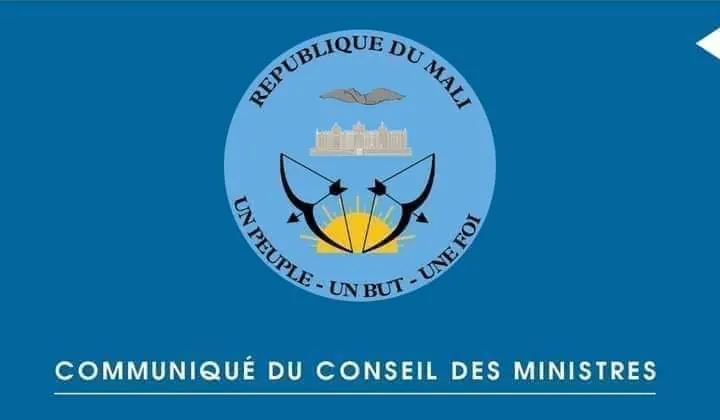
The Council of Ministers of Mali, led by General Assimi Goita, President of the Transition and Head of State, convened on September 30, 2026, at the Palace of Koulouba. During the meeting, the Council adopted several projects, made nominations, and heard communications. The Council approved projects related to the creation, organization, and functioning of the School of Mines and Petroleum. This new institution aims to provide quality training for human resources in the mining and petroleum sectors.
The School of Mines and Petroleum was created to address the shortage of training structures for mining and petroleum professionals and the limited coverage of specialized fields in existing training programs. The Council also adopted projects related to the creation, organization, and functioning of the Agency for Research and Development of Mineral Resources. This agency will focus on research, production, securing, valuation, and dissemination of geological, mining, petroleum, and gas knowledge in the country.
The Council of Ministers also adopted several decrees related to the renewal of mining permits for various companies. These companies, including Company Mines And Career SARL, Hongda Liujiu Mali SARL, and Ressources Robex Mali SARL, were granted permits in 2018, 2019, 2021, and 2022. The permits were affected by a suspension in renewals between December 2022 and March 2025. The decrees allow these companies to continue their research activities for an additional three years, renewable once.
In addition to the mining permits, the Council adopted a decree fixing the details of competencies transferred from the State to local authorities in the field of Agriculture, Rural Development, and Equipment. This move aims to decentralize responsibilities and enhance local governance in the agricultural sector. The transfer of competencies is part of the government's efforts to reform the country's agricultural and rural development policies.
The Council of Ministers also reviewed the country's mining sector and noted the need for optimal exploitation of Mali's mineral resources. The creation of the School of Mines and Petroleum and the Agency for Research and Development of Mineral Resources is expected to boost the country's capacity to manage its mineral wealth effectively. The government has emphasized the importance of developing the mining sector to drive economic growth and development.
The meeting of the Council of Ministers reflects the government's commitment to developing Mali's mining and petroleum sectors. The new initiatives aim to enhance the country's capacity to manage its mineral resources, promote research and development, and provide quality training for professionals in the sector. The government has also reiterated its support for local authorities and the decentralization of responsibilities in the agricultural sector.
The Council of Ministers' decisions are expected to have a positive impact on Mali's economy and development. The country's mining sector is a significant contributor to its GDP, and the new initiatives aim to increase revenue and create jobs. The government has emphasized the need for sustainable and responsible management of the country's mineral resources to ensure long-term benefits for the country and its people.
Key points
- The Council of Ministers adopted projects related to the creation of the School of Mines and Petroleum and the Agency for Research and Development of Mineral Resources.
- The Council renewed mining permits for several companies, allowing them to continue their research activities for an additional three years.
- The government transferred competencies from the State to local authorities in the field of Agriculture, Rural Development, and Equipment.