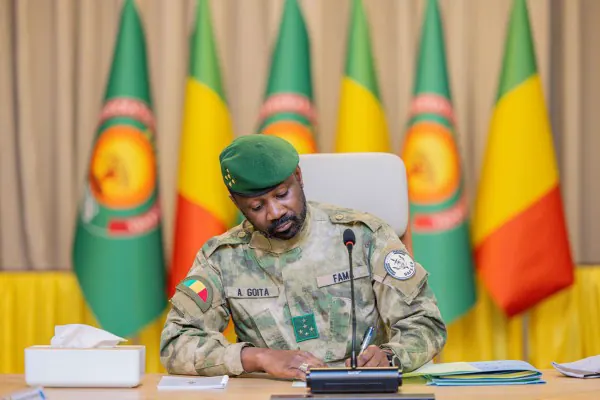
The Council of Ministers of Mali convened on Friday, October 9, 2026, and made several key decisions aimed at promoting energy efficiency and sustainable development in the country. As part of its efforts to implement the Regional Initiative for Sustainable Energy, the Council adopted two decrees aimed at reducing energy consumption and promoting energy efficiency. These decrees, which transpose the directives of the West African Economic and Monetary Union (UEMOA), establish a harmonized framework for energy efficiency in Mali.
The first decree fixes the modalities for the energy labeling of new electric lamps and household appliances. This measure aims to harmonize labeling standards and impose a standardized information system on the energy consumption of electrical equipment marketed in Mali. The goal is to gradually eliminate energy-intensive or poor-quality appliances from the market. The second decree sets energy efficiency measures for building construction, establishing minimum requirements for energy performance in terms of thermal insulation and efficiency of air conditioning and lighting systems.
These directives align with Mali's national policies and strategies for promoting energy mastery, energy efficiency, and sustainable development. The decrees adopted by the Council of Ministers transpose these directives into national regulations, providing a framework for their implementation. The measures are expected to contribute to reducing energy consumption and promoting sustainable development in Mali.
In addition to adopting these decrees, the Council of Ministers also made key appointments in various ministries. In the Ministry of Defense and Veterans Affairs, Colonel (ER) Issa KALOGA was appointed as a chargé de mission, while Colonel-major Abdoulaye Kola MAIGA was appointed as a high defense official at the Ministry of Health and Social Development. Other appointments were made in the Ministry of Territorial Administration and Decentralization, the Ministry of Foreign Affairs and International Cooperation, and other ministries.
The Council of Ministers also adopted texts related to the creation, organization, and functioning of the Program for the Development of Irrigation in the Bani Basin and in Sélingué-Phase II. The program aims to develop hydro-agricultural infrastructure in the Sélingué, Bla, San, and Djenné areas and create conditions for their exploitation. The program's organization and functioning are fixed by decrees, and its implementation is expected to improve agricultural productivity and food security in the region.
Furthermore, the Council of Ministers took note of a written communication on the 4th Statistical Master Plan and its action plan. The plan aims to strengthen the national statistical system and provide a framework for statistical activities in Mali. The plan is built around four strategic axes, including improving the management of the national statistical system and strengthening sectoral and deconcentrated structures.
The 4th Statistical Master Plan and its action plan for 2026-2030 were elaborated to address the shortcomings and consolidate the achievements of previous plans. The plan is expected to improve the availability and quality of statistical data, which will inform decision-making and policy development in Mali.
Key points
- The Council of Ministers adopted decrees on energy labeling of electric lamps and household appliances and energy efficiency in building construction.
- Key appointments were made in various ministries, including Defense, Territorial Administration, and Foreign Affairs.
- The Council of Ministers adopted texts related to the Program for the Development of Irrigation in the Bani Basin and in Sélingué-Phase II.