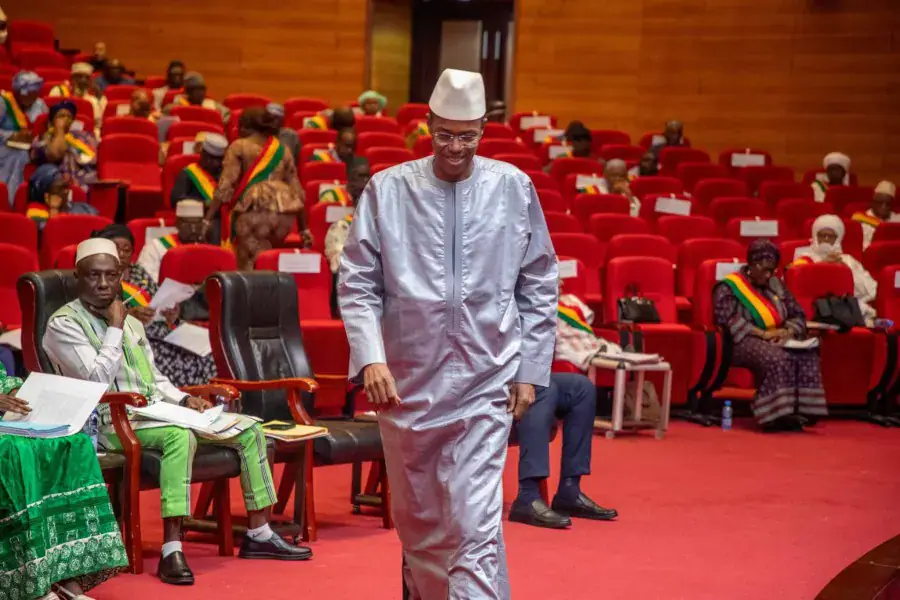
The Conseil National de Transition (CNT) of Mali has adopted a law determining the fiscal resources of local authorities. The law, which was examined and adopted in a plenary session on November 26, 2026, aims to adapt the distribution of tax revenues to the country's new territorial organization. The CNT, led by Honorable Hamèye Founé Mahalmadane, first vice-president, initiated the project to strengthen the financial capacities of communes, regions, and the District of Bamako.
The law, introduced by Minister of State for Economy and Finance, Alousséni Sanou, defines the modalities for distributing several tax revenues between communes and regions. The Taxe de Développement Régional et Local (TDRL) will be allocated 92% to communes and 8% to regions. The law also provides for a 75% allocation to communes and 25% to regions for property taxes, patents, and licenses. Other taxes, such as those on livestock, firearms, and motor cycles, will be distributed according to specific rates.
The reform aims to enable local authorities to assume their competencies more effectively and respond to population needs. The law clarifies the mechanisms for collecting and managing local tax resources and specifies the responsibilities of tax administration services, Domaines and Cadastre services, and public accountants. The digitalization of tax procedures is also expected to improve revenue collection, simplify operations, and strengthen local resource mobilization.
The CNT adopted the law unanimously, with 116 votes in favor, no votes against, and no abstentions. The law is expected to provide a reference framework for local authorities to prepare their budgets, improve their own resource mobilization, and consolidate local development financing. The reform is part of a broader effort to adapt the country's territorial organization and strengthen local governance.
The new law takes into account the changes in the country's territorial organization resulting from recent administrative and institutional reforms. It aims to ensure that local authorities have the necessary resources to carry out their missions and provide better services to the population. The law also aims to promote transparency and accountability in local resource management.
The adoption of this law is a significant step towards decentralization and local development in Mali. The CNT's decision is expected to have a positive impact on local governance and service delivery. The law will come into effect after its promulgation by the Transitional President.
The CNT's plenary session was attended by various stakeholders, including government officials and civil society representatives. The adoption of the law marks a major milestone in Mali's efforts to strengthen local governance and promote sustainable development. The country's decentralization process is expected to gain momentum with the implementation of this law.
Key points
- The law determines the fiscal resources of local authorities in Mali.
- The CNT adopted the law unanimously with 116 votes in favor.
- The law aims to strengthen the financial capacities of local authorities.
Reporting sources
- Le CNT adopte le projet de loi déterminant... · Maliweb.net