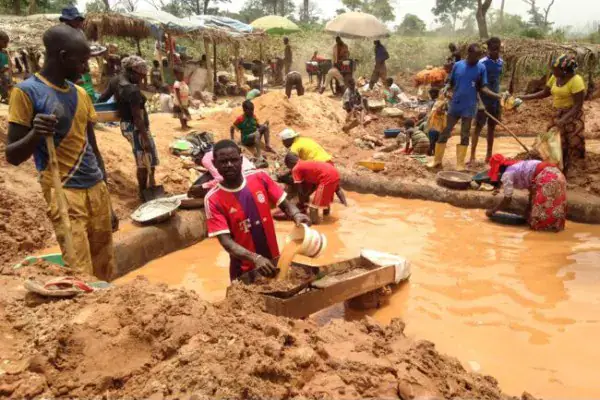
In Mali's gold-rich regions, artisanal gold mining has become a significant economic activity, providing income for thousands of people. However, the environmental and health impacts of this industry are increasingly concerning. The extraction process involves digging up land, cutting down trees, and polluting waterways, causing irreversible damage to ecosystems. The effects of this degradation are felt by local communities, whose livelihoods depend on agriculture and fishing.
The Malian government has launched measures to regulate the mining sector and combat clandestine activities. A special mining brigade has been created to monitor sites, detect infractions, and contribute to the fight against illegal mining. The brigade's efforts have led to the closure of 61 clandestine sites, the seizure of 286 excavators, and 63 vehicles. These operations aim to curb the use of heavy machinery and reduce environmental degradation.
Artisanal gold mining in Mali also poses significant health risks, particularly due to the use of mercury in the extraction process. According to the Malian government's national action plan, around 33 tonnes of mercury are released into the environment annually. This toxic substance can contaminate soil, water, and food, causing neurological damage, especially in pregnant women and children.
The Malian government has also taken steps to better regulate the mining sector, including a freeze on new mining permits and a gradual resumption of permit renewals and transfers. The Chamber of Mines reports that 21 research permits were processed between March 2025 and the same period in 2026. These efforts aim to increase transparency and control over mining activities.
To mitigate environmental damage, the Malian government has implemented a seasonal ban on gold mining from June 15 to September 30. This ban aims to prevent accidents and collapses caused by rainfall. Additionally, the PlanetGold Mali project, supported by international partners, seeks to promote less polluting mining techniques and reduce mercury use.
Environmental protection in Mali's mining sector also requires the rehabilitation of exploited sites, including the refilling of excavations and the securing of tunnels. The mining code stipulates environmental obligations, which must be translated into concrete actions on the ground. Local communities and workers must be protected from the risks associated with mining.
The challenge for Mali's authorities is to balance the economic benefits of artisanal gold mining with the need to protect the environment and public health. Effective regulation and enforcement of mining activities are crucial to preventing further environmental degradation and ensuring sustainable development.
Key points
- Mali's artisanal gold mining sector faces significant environmental and health challenges.
- The Malian government has launched measures to regulate the sector and reduce environmental damage.
- Mercury use and lack of site rehabilitation are major concerns.