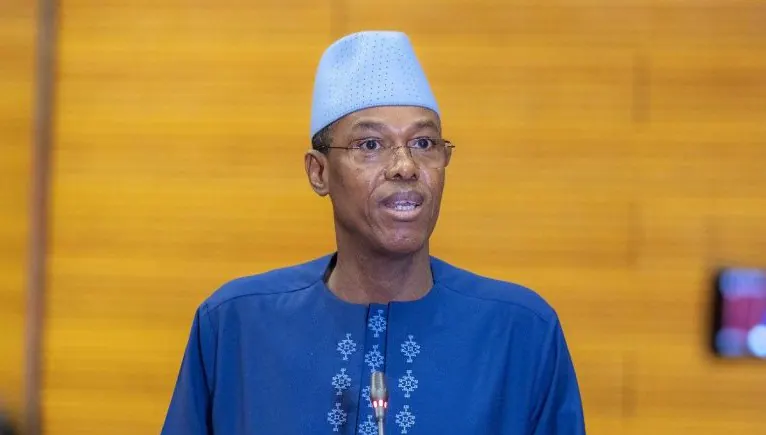
The Council of Ministers of Mali, under the presidency of General Assimi Goita, met in ordinary session on September 18, 2026, at the Palace of Koulouba. During the meeting, several key decisions were made, including the adoption of a draft finance bill for 2027. This bill was presented by the Minister of State for Economy and Finance. The 2027 budget outlines projected revenues and expenditures for the upcoming year.
The draft finance bill for 2027 forecasts revenues of 3,866.635 billion FCFA, marking an increase from the 3,372.895 billion FCFA projected in the revised 2026 finance law. This represents a significant rise of 493.740 billion FCFA, or 14.64%. The increase in revenue projections suggests a positive outlook for Mali's economy. The bill also details planned expenditures for 2027.
Expenditures for 2027 are projected to reach 4,462.646 billion FCFA, up from 3,993.319 billion FCFA in the revised 2026 finance law. This represents an increase of 469.326 billion FCFA, or 11.75%. The budget outlines allocations for various sectors, aiming to support economic growth and development. A balanced approach to spending and revenue generation is crucial for achieving these goals.
A notable aspect of the 2027 budget is the projected decrease in the budget deficit. The deficit is expected to be 596.011 billion FCFA, down from 620.425 billion FCFA in the revised 2026 finance law. This decrease of 24.414 billion FCFA, or 3.93%, indicates a positive trend in Mali's fiscal management. Reducing the budget deficit is essential for maintaining economic stability.
The adoption of the 2027 finance bill is a key decision made during the Council of Ministers' session. This bill was prepared in accordance with the Organic Law on Finance Laws, which aims to enhance transparency and accountability in budgetary matters. The bill's approval reflects the government's commitment to prudent fiscal management and sustainable economic development.
The Council of Ministers also made several appointments and heard communications during the session. These decisions are part of the government's ongoing efforts to address various challenges facing the country. Effective governance and strategic decision-making are crucial for Mali's progress.
The 2027 budget's adoption marks a significant step in Mali's economic planning. With increased revenue projections and a reduced budget deficit, the government aims to promote economic growth and improve living standards. The implementation of this budget will be closely monitored to assess its impact on the country's economy.
Key points
- The 2027 budget projects revenues of 3,866.635 billion FCFA, a 14.64% increase from the revised 2026 finance law.
- Expenditures for 2027 are projected to reach 4,462.646 billion FCFA, an 11.75% increase from the revised 2026 finance law.
- The budget deficit is expected to decrease by 3.93% to 596.011 billion FCFA.