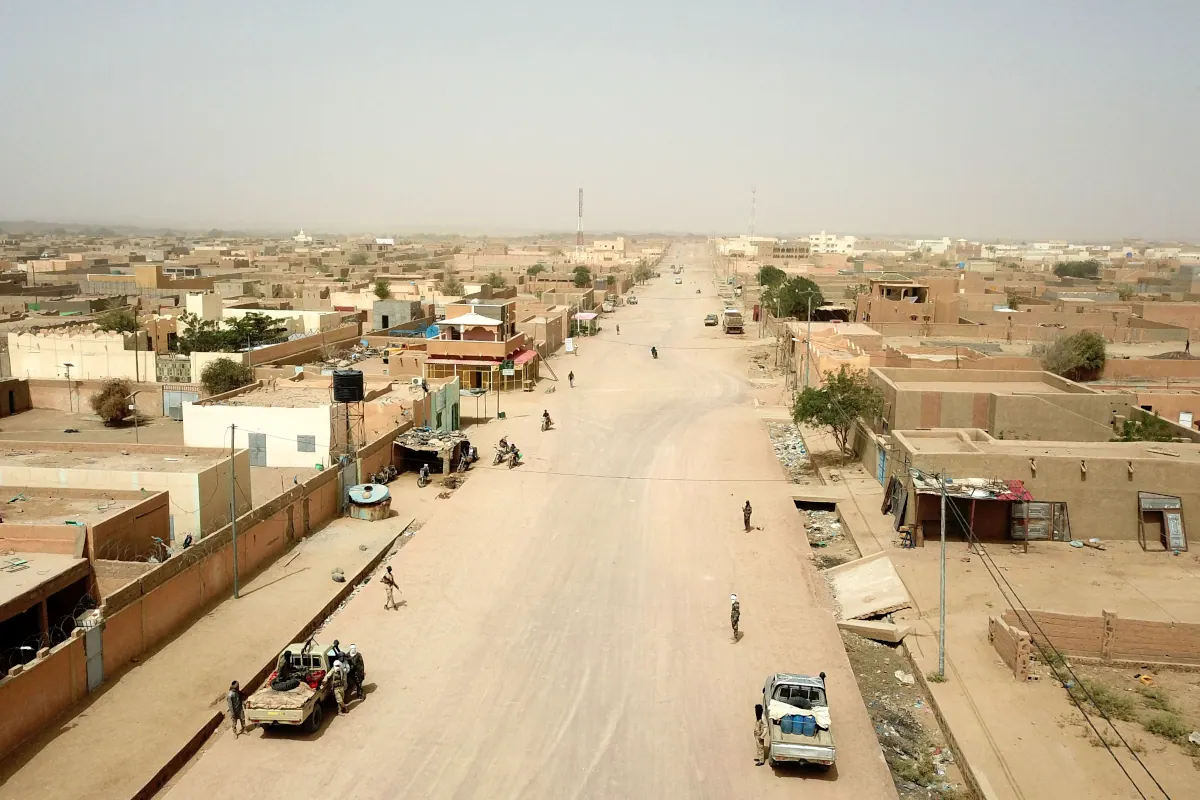
On Tuesday, October 6, 2026, the Malian army, with the support of Russian mercenaries from Africa Corps, successfully recaptured the strategic city of Kidal from separatist groups. The city, located in northern Mali, had been under the control of the Front de libération de l'Azawad (FLA) since April 2026. The recapture of Kidal marks a significant victory for the Malian government, which had been working to regain control of the city since its loss.
The Malian army's success in recapturing Kidal can be attributed to improved intelligence gathering and enhanced aerial capabilities. In April 2026, the army's lack of intelligence had contributed to its surprise defeat by the FLA and JNIM. However, since then, the army has made significant strides in gathering intelligence, allowing it to better prepare for and respond to separatist attacks. The introduction of Russian drones, specifically Geran drones, has also given the Malian army a significant advantage in terms of aerial capabilities.
The FLA's decision to withdraw from Kidal without a fight suggests that the group's leaders recognized the futility of continued resistance. In a statement, the FLA cited the "disproportionate use of aerial vectors" by Russian mercenaries and the Malian army as a key factor in their decision to retreat. The recapture of Kidal marks a significant shift in the balance of power in northern Mali, with the Malian government and its allies gaining the upper hand.
The recapture of Kidal is a significant symbolic victory for the Malian government, which had been seeking to regain control of the city since its loss in April. However, the Malian government must acknowledge that the conflict in northern Mali is far from over. The region has been plagued by violence and instability for over two decades, and a lasting solution will require a comprehensive approach that addresses the root causes of the conflict.
A key aspect of the Malian government's strategy to stabilize the region is its focus on improving intelligence gathering and enhancing its military capabilities. The introduction of Russian drones has given the Malian army a significant advantage in terms of aerial capabilities, allowing it to more effectively counter separatist attacks. However, the government must also address the underlying issues driving the conflict, including poverty, inequality, and lack of access to basic services.
The international community has been closely watching developments in Mali, with many countries expressing support for the Malian government's efforts to stabilize the region. The recapture of Kidal marks a significant step forward in this process, but much work remains to be done. The Malian government must continue to engage with regional and international partners to secure the support and resources needed to address the complex challenges facing the country.
As the Malian government celebrates its victory in Kidal, it must also acknowledge the significant challenges that lie ahead. The conflict in northern Mali is complex and multifaceted, and a lasting solution will require a sustained commitment to peace and stability. The recapture of Kidal marks an important milestone in this process, but it is only the beginning of a long and difficult journey towards peace and stability in northern Mali.
Key points
- The Malian army's recapture of Kidal was made possible by improved intelligence gathering and enhanced aerial capabilities, including the use of Russian drones.