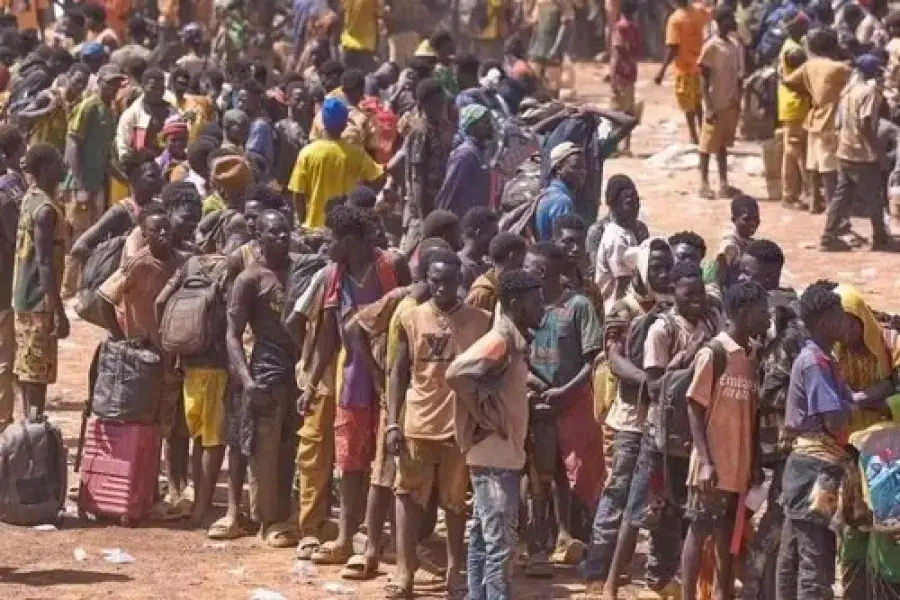
The influx of refugees began on November 2, 2026, when the Guinean government announced a ban on artisanal gold mining in the north-east of the country, citing environmental concerns. The move sparked a crackdown on informal mining sites, forcing thousands of Burkinabè workers to flee. Many of these workers, who had been employed on mining sites in Guinea, made their way to the Malian border town of Kourémalé.
The refugees, including women and children, have been arriving in Mali with little more than the clothes on their backs. Many have reported being forced to leave behind their belongings and livelihoods. Abdoul Kaboré, a 27-year-old refugee from Kaya, Burkina Faso, described the traumatic experience of being forced to flee his home. The Malian authorities have set up a system to receive and assist the refugees, including providing food, shelter, and medical care.
The Malian government has mobilized significant resources to respond to the crisis, including deploying troops and equipment to the border region. The government has also established a humanitarian corridor to facilitate the transportation of refugees back to Burkina Faso. On November 7, 2026, the Malian government reported that over 15,000 people had been transported back to Burkina Faso, with many more expected to follow.
The crisis has highlighted the deep economic and social ties between the countries of the Sahel region. Many Burkinabè workers have been employed in Guinea's informal mining sector for years, sending remittances back to their families. The closure of the mining sites has left them without a source of income or a place to live. The Malian government's response to the crisis has been praised by many as a demonstration of solidarity and pan-Africanism.
The Burkinabè government has also been actively involved in responding to the crisis. A delegation led by the Minister of Security, Mahamadou Sana, visited Bamako on November 4, 2026, to coordinate the return of Burkinabè refugees. The two governments have been working closely together to ensure the safe and dignified return of the refugees.
The humanitarian response to the crisis has been extensive, with many organizations and individuals providing assistance to the refugees. The Malian government has been working with local communities, NGOs, and international organizations to provide food, shelter, and medical care to those in need. The crisis has also highlighted the need for long-term solutions to address the root causes of migration and displacement in the Sahel region.
As the situation continues to unfold, the international community is watching closely. The crisis has significant implications for regional stability and security, as well as the humanitarian and economic well-being of the affected populations. The Malian government's response to the crisis has been seen as a test of its ability to manage complex humanitarian emergencies and provide for the needs of its citizens and those of neighboring countries.
Key points
- The Guinean government's ban on artisanal gold mining has led to a significant influx of Burkinabè refugees into Mali.
- The Malian government has responded to the crisis by mobilizing resources and establishing a humanitarian corridor to facilitate the transportation of refugees back to Burkina Faso.
- The crisis has highlighted the deep economic and social ties between the countries of the Sahel region and the need for long-term solutions to address the root causes of migration and displacement.
Reporting sources
- Burkinabè refoulés de la Guinée : Déferlante... · Maliweb.net