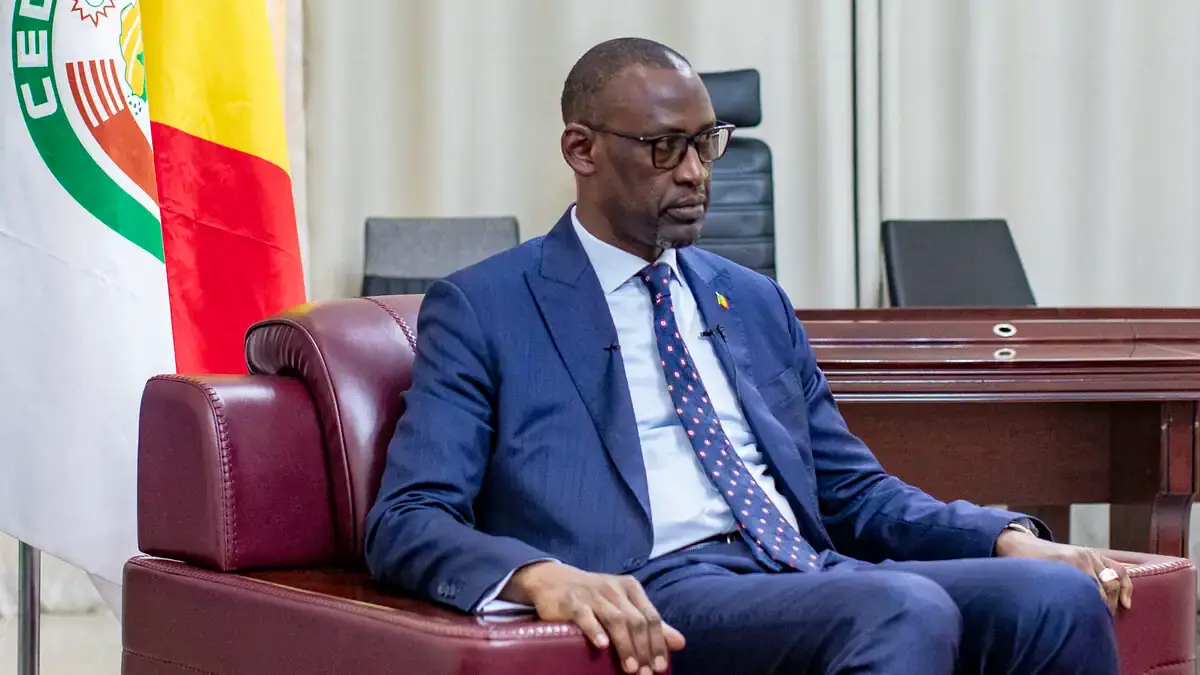
On September 24, 2026, Mali's Foreign Minister Abdoulaye Diop expressed his country's continued support for Morocco's autonomy plan for Western Sahara during the 81st session of the United Nations General Assembly in New York. This statement comes after a meeting with his Moroccan counterpart, Nasser Bourita. Diop emphasized that Bamako considers autonomy under Moroccan sovereignty as a viable solution to the Western Sahara conflict.
The Malian government's decision to back Morocco's initiative was made on April 10, 2026. Diop urged the UN General Assembly to contribute to the realization of this plan. He also voiced full support for UN Security Council Resolution 2797, adopted on October 31, 2025, which is seen as a crucial step toward resolving the regional dispute. The resolution aims to find a peaceful and lasting solution to the Western Sahara conflict.
The cooperation between Mali and Morocco is based on the principles of respecting the sovereignty and territorial integrity of both nations, according to Diop. This stance contrasts with that of Algeria, which advocates for the right of the Sahrawi people to self-determination and supports the Polisario Front, a group seeking independence for Western Sahara. Algeria's position was reaffirmed in August 2026.
The divergence in views between Mali and Algeria on Western Sahara occurs amid a recent improvement in relations between the two countries. In July 2026, Mali and Algeria resumed diplomatic ties, marked by the return of ambassadors and the reopening of airspaces. This was followed by a visit to Algiers by Mali's Prime Minister Abdoulaye Maïga in August to discuss bilateral cooperation.
Despite the renewed dialogue, Mali's position on Western Sahara has not shifted. The country views Morocco's autonomy plan as the foundation for resolving the conflict. This stance has been consistent since April 2026. The historical relationship between Mali and Algeria, which spans over 1,300 kilometers of shared border and dates back to 1963, adds complexity to their current differing positions.
Mali and Algeria share a common history, particularly related to the Algerian War of Independence. Algeria played a significant role in negotiations concerning the rebellions in northern Mali, leading to the 2015 Agreement for Peace and Reconciliation in Mali. However, Bamako announced the end of this agreement in January 2024, citing strained relations with Algiers.
The recent developments highlight the intricate dynamics at play in the region. Mali's continued support for Morocco's autonomy plan for Western Sahara, despite improved relations with Algeria, underscores the challenges in achieving a consensus on the issue. The situation remains a critical point of discussion within the international community, particularly at the UN.
Key points
- Mali's Foreign Minister Abdoulaye Diop reaffirms support for Morocco's autonomy plan for Western Sahara at the UN General Assembly.
- The support is based on the principles of respecting the sovereignty and territorial integrity of both Mali and Morocco.
- The stance diverges from Algeria's, which supports the Sahrawi people's right to self-determination and the Polisario Front.
Reporting sources
- Sahara occidental : à l’ONU, le Mali soutient le Maroc malgré la détente avec l'Algérie · La Nouvelle Tribune