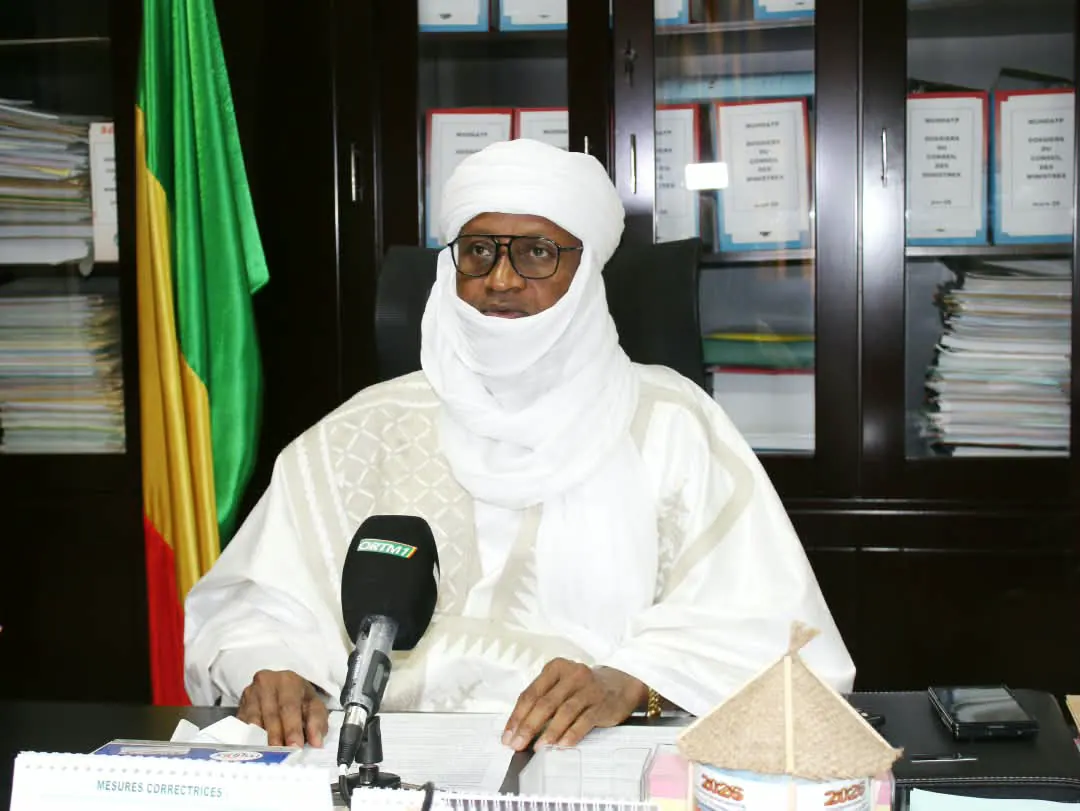
The Malian government has reiterated its dedication to ensuring access to decent housing for all citizens. On October 2, 2026, Minister of Urbanism, Housing, Domains, Territorial Planning, and Population Imirane Abdoulaye Touré addressed the nation, highlighting the government's efforts to address the country's housing needs. This comes ahead of World Habitat Day on October 5 and World Cities Day on October 31, 2026.
The United Nations Human Settlements Programme (UN-Habitat) has designated October as "Urban October," a period of reflection on the future of cities and the living conditions of their inhabitants. This year's World Habitat Day is themed "A Decent Home for All," while World Cities Day is themed "Regenerating Cities, A Decent Home for All." These themes emphasize the universal requirement for decent housing that is safe, affordable, and connected to essential services.
According to Minister Touré, the construction of new homes is not sufficient; it is also essential to regenerate existing neighborhoods, improve sanitation, access to water, and proximity equipment. He noted that Mali's cities are experiencing rapid growth, leading to a shortage of housing and many households building outside of norms, often in high-risk areas. The minister emphasized that public action must be constant and based on planning, control, and consultation.
The Malian government has been implementing a policy to promote access to decent housing for low- and middle-income populations for over 20 years. Since 2002, public social housing programs have launched a total of 19,312 homes, including 16,009 in Bamako and Kati, and 3,300 in other regions. Under the leadership of President of the Transition General Assimi Goïta, the government has strengthened its partnership with the private sector to increase the housing supply.
As part of this partnership, 8,920 homes have been completed, and 5,100 others are currently under construction. The government is also working on urban planning, with the aim of providing cities with planning tools to ensure harmonious, balanced, and sustainable development. This includes the revision of urban planning schemes for several cities, including Ménaka, Koutiala, Kéniéba, Bougouni, and Djenné.
The government is also focused on improving living conditions in Bamako and its surroundings through a project funded by the World Bank. The project aims to enhance the quality of life for residents in the district and its environs. Minister Touré emphasized that the government's efforts are geared towards addressing the challenges posed by rapid urbanization and ensuring that all citizens have access to decent housing.
The government's commitment to providing decent housing for all citizens is seen as a key step towards addressing the country's urbanization challenges. With the support of international organizations and the private sector, the government aims to make significant progress in the coming years. The celebration of World Habitat Day and World Cities Day serves as a reminder of the importance of decent housing and sustainable urban development.
Key points
- The Malian government has launched public social housing programs, resulting in 19,312 homes being built since 2002.
- The government has strengthened its partnership with the private sector, resulting in 8,920 homes being completed and 5,100 others under construction.
- The government is working on urban planning, including the revision of urban planning schemes for several cities, to ensure harmonious and sustainable development.