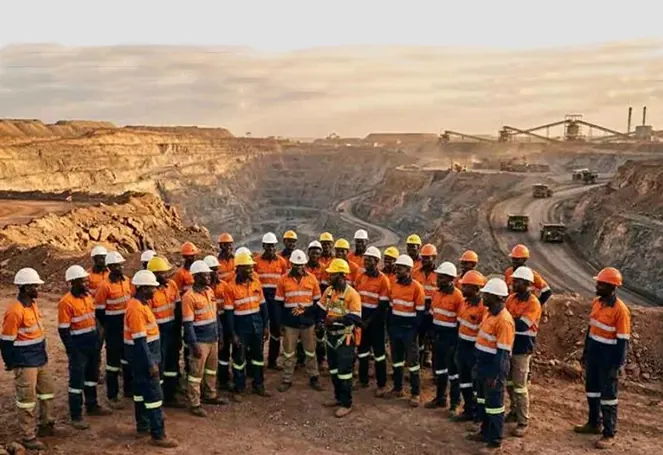
Several unions in Mali have announced plans to go on strike, citing concerns over unpaid wages, benefits, and working conditions. The strikes, set to begin in late September, are a result of failed negotiations between workers and their employers. In the mining sector, unions representing workers at SOMILO SA and GOUNKOTO SA have announced a four-day strike, starting September 28. They claim that their demands, submitted in February, have been ignored, including requests for overtime pay and reimbursement of mission expenses.
The strike by SOMILO SA and GOUNKOTO SA workers is not an isolated incident. Employees of Food & Events Africa, a catering and support services provider, have also announced a five-day strike, starting September 28. They accuse management of failing to implement agreements related to overtime pay, benefits, and working conditions. Meanwhile, unions representing workers at the National Directorate of Geology and Mines and other mining administration services have issued a 72-hour strike notice, demanding unpaid salaries, allowances, and sectoral bonuses.
The strikes are largely driven by concerns over the regularity of income and respect for agreements. Workers say that delays in payment or reimbursement have affected their household expenses. Food prices, however, have shown mixed trends. According to the FAO, wholesale prices of millet and sorghum in Mali remained stable in August 2026. However, prices have increased by up to 9% and 10% in some markets, while decreasing by up to 33% and 29% compared to August 2025, due to a good cereal harvest in 2025.
Despite the national trend of stable food prices, consumers in some regions are facing higher costs. In Gao and Timbuktu, cereal prices are significantly higher than in other monitored markets, due to trade disruptions and depleted household stocks. The national average does not accurately reflect what households actually pay, depending on their location and local supply chain conditions. The strikes are a result of workers' frustration with their employers' failure to address their concerns.
The unions have maintained their strike deadlines while leaving room for negotiations. It remains to be seen whether the demanded payments and disputed agreements can be resolved before the strikes begin. The situation is being closely watched, as the mining sector is a significant contributor to Mali's economy. The government and companies involved have not publicly commented on the strike notices.
The strikes are a sign of growing tensions between workers and employers in Mali. Workers are demanding better pay and benefits, citing the rising cost of living. The government and companies must address these concerns to prevent further labor unrest. The situation is being closely monitored, as it could have implications for the country's economic stability.
As the strike deadlines approach, negotiations between workers and employers may still be possible. However, if the demands are not met, the strikes could have significant impacts on the mining sector and the broader economy. Key stakeholders, including the government, companies, and unions, must work together to find a solution that addresses the concerns of all parties involved.
Key points
- Multiple unions in Mali have issued strike notices, demanding better pay and benefits.
- The strikes are driven by concerns over unpaid wages, benefits, and working conditions.
- Food prices in Mali have shown mixed trends, with some regions experiencing higher costs.