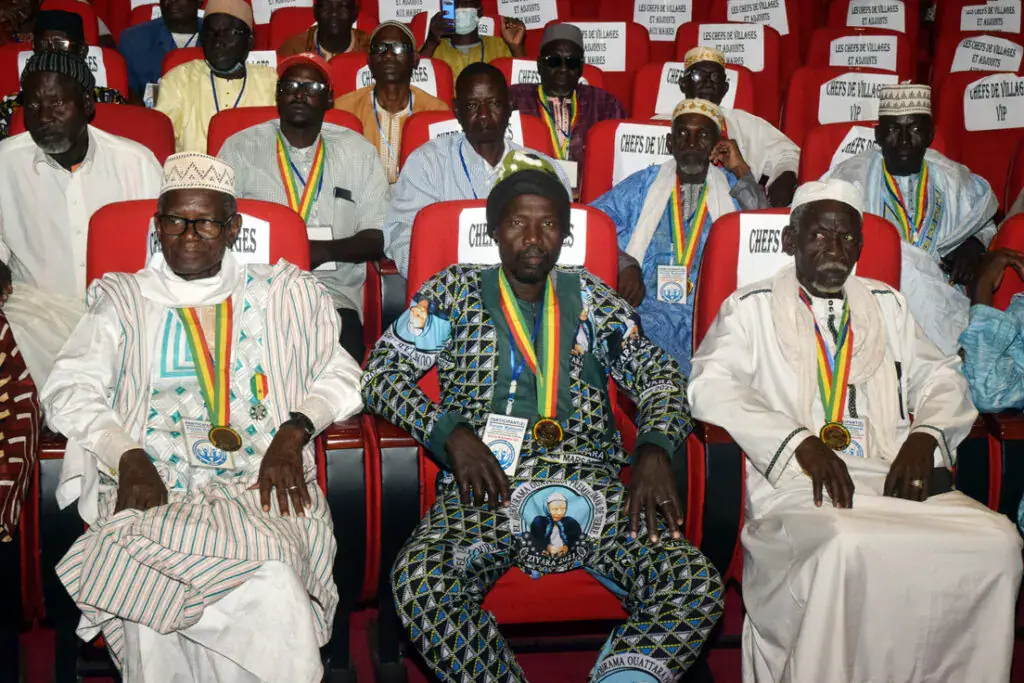
The Malian transitional council, or CNT, has voted to adopt a law that clarifies the role of traditional authorities in the country's institutional organization. The law, which was passed on November 19, 2026, aims to define the relationship between traditional authorities and the state. It also seeks to promote the impartiality of traditional leaders and ensure their independence. The law has been hailed as a positive step towards recognizing the importance of traditional authorities in Malian society.
Traditional authorities have long played a significant role in Malian society, particularly in rural areas where they often serve as mediators and advisors. The law recognizes their importance and seeks to clarify their role in the country's governance structure. According to Mohamed Ben Chérif Diabaté, a traditionalist, traditional authorities serve as a "safety valve" for society, providing a channel for people to resolve disputes and seek advice. The law aims to promote the legitimacy and authority of traditional leaders.
The new law is part of a broader effort to recognize and support traditional authorities in Mali. In 2022, the government established a national day to honor traditional authorities, which is celebrated on November 11. The 2023 constitution also recognizes the role of traditional authorities in promoting social cohesion and preventing conflicts. The law passed in December 2024 defined the categories and roles of traditional authorities, and the latest ordinance provides specific guidelines for the designation and functioning of village, fraction, and neighborhood councils.
One of the key aspects of the new law is the clarification of the relationship between traditional authorities and the state. Under the previous law of 2006, traditional leaders were under the authority of the mayor, but the new ordinance places them under the authority of the representative of the state in the arrondissement. This change aims to strengthen the role of the state in local governance while ensuring the independence of traditional leaders. The law also provides for the designation of traditional leaders according to local customs, without limitation of duration.
The law has been welcomed by some as a positive step towards promoting the role of traditional authorities in Malian society. El Hassan Ag Elmehdi, President of the Superior Council of Imitcha, has called for traditional authorities to be given a greater role in advising the state. However, others have expressed concerns about the potential risks of the law, including the possibility that traditional leaders may become too dependent on the state. Mamadou Ballo, in a study published in 2026, highlighted the risk that financial dependence on the executive could undermine the moral authority of traditional leaders.
The implementation of the law will require careful consideration of the complex relationships between traditional authorities, local government, and the state. In some areas, traditional leaders have already begun to engage with local government and other stakeholders to discuss the implications of the new law. For example, a meeting held in Niafunké on September 10, 2026, brought together traditional leaders, elected officials, and representatives of local associations to discuss the law and its implications for local governance.
The new law aims to promote the impartiality and independence of traditional leaders, while also ensuring their accountability to the state and local communities. The law provides for the establishment of a transparent and inclusive process for the designation of traditional leaders, as well as mechanisms for resolving disputes and addressing grievances. By clarifying the role of traditional authorities, the law seeks to promote greater stability and social cohesion in Malian society.
Key points
- The Malian transitional council has adopted a law to define the role of traditional authorities in the country's institutional organization.
Reporting sources
- Autorités et légitimités traditionnelles : Quelle autonomie face à l’État ? · Le Journal du Mali