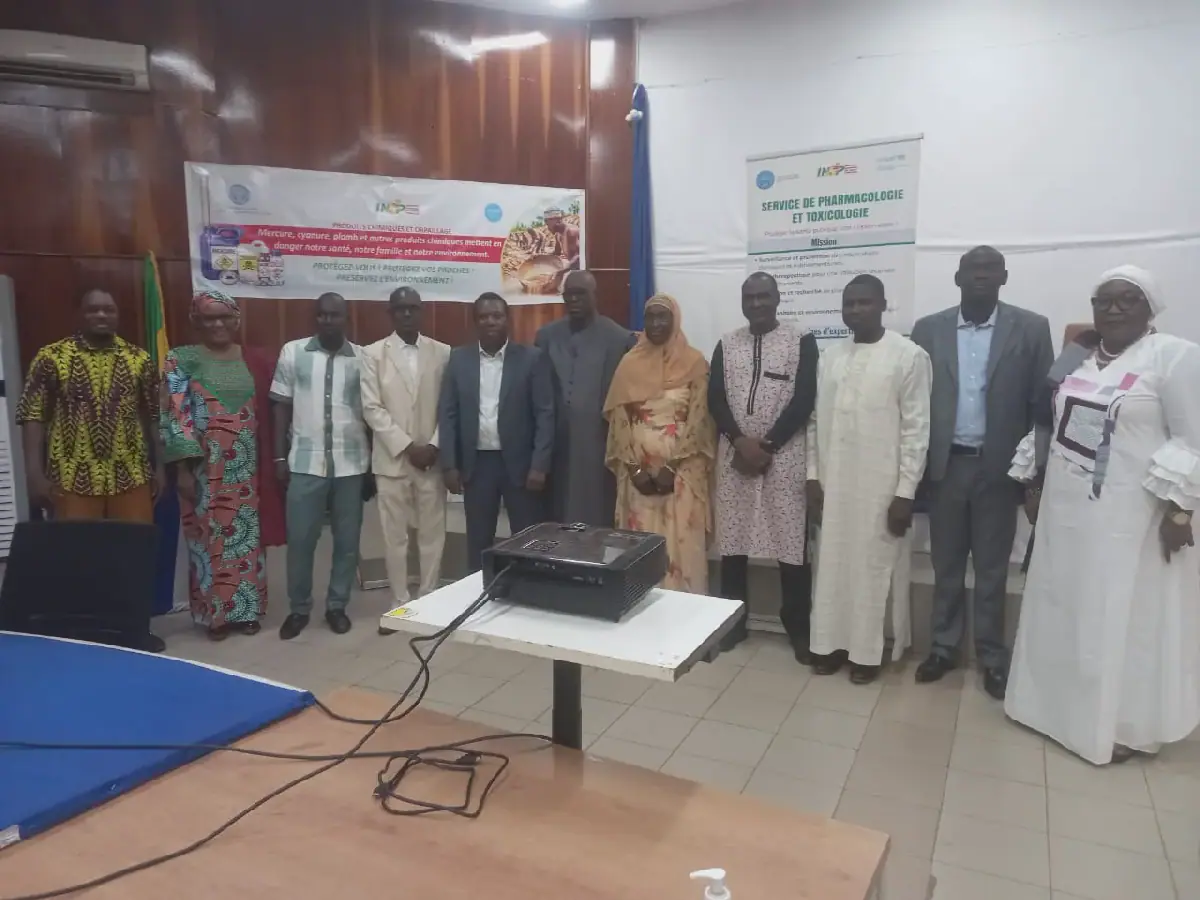
The Malian Ministry of Health and Social Development, through the Pharmacology and Toxicology Service of the National Institute of Public Health (INSP), recently presented a national strategic plan to combat chemical poisoning. The plan, which covers 2027-2031, aims to prevent and mitigate the effects of chemical poisoning, particularly among children and pregnant women. The plan was unveiled at a press conference held at the INSP in Bamako, attended by various stakeholders from the health, environment, and social development sectors.
Chemical poisoning poses significant risks to public health in Mali, particularly among children under five and pregnant women. The main sources of exposure include the use of pesticides in agriculture, pollution from artisanal gold mining, and the misuse of household products such as caustic soda. Prolonged exposure to toxic substances like lead can have severe health consequences, including damage to the nervous system, kidneys, and blood system. The new plan seeks to address these risks through prevention, awareness, and improved victim care.
The strategic plan is built around six key axes, with a focus on prevention and awareness. One of the primary objectives is to raise public awareness about the dangers of chemical poisoning and promote preventive behaviors. The plan also aims to establish a 24/7 poison control center to provide rapid assistance in cases of poisoning. This center is expected to improve the care and treatment of victims.
The press conference was attended by professors Sanou Khô Coulibaly and Tidiane Diallo, who presented the plan alongside the Director-General of INSP, Professor Ibrahima Guindo. The event brought together representatives from various sectors, including human and animal health, environment, and social development. The goal was to inform the media and the public about the risks associated with chemical poisoning and the key components of the new strategic plan.
According to the INSP, the plan's implementation will involve collaboration with various stakeholders, including government agencies, NGOs, and community organizations. The aim is to mobilize public opinion and engage the media in disseminating preventive behaviors and emergency response measures. By working together, the authorities hope to reduce the incidence of chemical poisoning and protect vulnerable populations.
The creation of a 24/7 poison control center is a key initiative under the plan. This center will provide critical support in cases of poisoning, enabling rapid intervention and treatment. The INSP emphasizes that prompt action is essential in cases of chemical poisoning, as delayed treatment can lead to severe health complications or even death.
The launch of the national strategic plan marks a significant step towards addressing the issue of chemical poisoning in Mali. By prioritizing prevention, awareness, and victim care, the authorities aim to mitigate the risks associated with chemical exposure and protect the health and well-being of the population, particularly children and pregnant women.
Key points
- The plan focuses on prevention and awareness, with a goal of reducing the incidence of chemical poisoning in Mali.