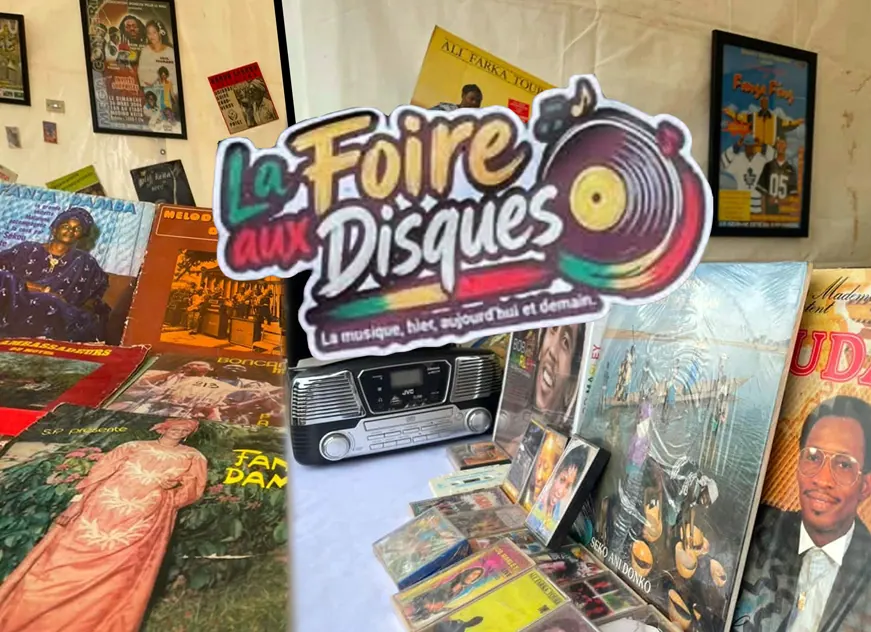
The first edition of the Foire aux Disques was held on the banks of the Palais de la Culture Amadou Hampâté Ba in Bamako, Mali, from September 24 to 27. Organized by the Union des Associations des Artistes, Producteurs et Éditeurs du Mali (UAAPREM), the event brought together artists, producers, editors, collectors, and music enthusiasts for four days. The fair was themed "La musique : hier, aujourd’hui et demain" (Music: yesterday, today, and tomorrow), highlighting Mali's musical history, its mediums, and transmission.
The fair featured an exhibition showcasing various music-related items, including vinyl records, CDs, photographs, posters, phonographs, and other artifacts that retraced several periods of Malian music creation. The exhibition demonstrated the evolution of listening, conservation, and dissemination methods for musical works. Visitors had the opportunity to see rare music formats. Souleymane Bathiono, Director of the Palais de la Culture, described the initiative as "a space for discovery, dialogue, and meeting around Malian music."
The event went beyond the exhibition, with a program that included conferences, debates, projections, intergenerational concerts, showcases, and honorary distinctions. Discussions focused on changes related to streaming and dematerialization. Bathiono presented the fair as an opportunity to "preserve Mali's musical memory while opening new perspectives for future generations." The concerts brought together artists from different generations, offering diverse repertoires.
The discussions and exchanges during the fair covered various topics, including music production, copyright, distribution, and the transformations of the music industry. These exchanges allowed different actors to share their experiences and revisit the challenges of conservation, dissemination, and transmission. The projections and meetings also highlighted the need for better documentation of the paths, works, and mediums that have shaped Malian music.
Mbaye Boubacar Diarra, President of UAAPREM, stated that the first edition aimed to showcase the progress made and spark reflection on the future. Tributes were paid to former music legends, producers, and other cultural actors. The fair sought to bring young generations closer to this heritage. At the end of the four-day event, the organizers expressed their desire to make this event a recurring one and continue the work of transmitting Malian musical memory.
The fair provided a platform for artists, producers, distributors, editors, and collectors to interact and give prominence to the works and paths that have marked different generations. The event demonstrated the importance of preserving and promoting Mali's rich musical heritage. The fair's success has raised hopes for its continuation and growth in future years.
Key points
- The fair featured an exhibition of music-related artifacts, including vinyl records, CDs, and photographs.
- The event included conferences, debates, and projections on topics such as music production, copyright, and distribution.
- The fair aimed to preserve Mali's musical memory and open new perspectives for future generations.