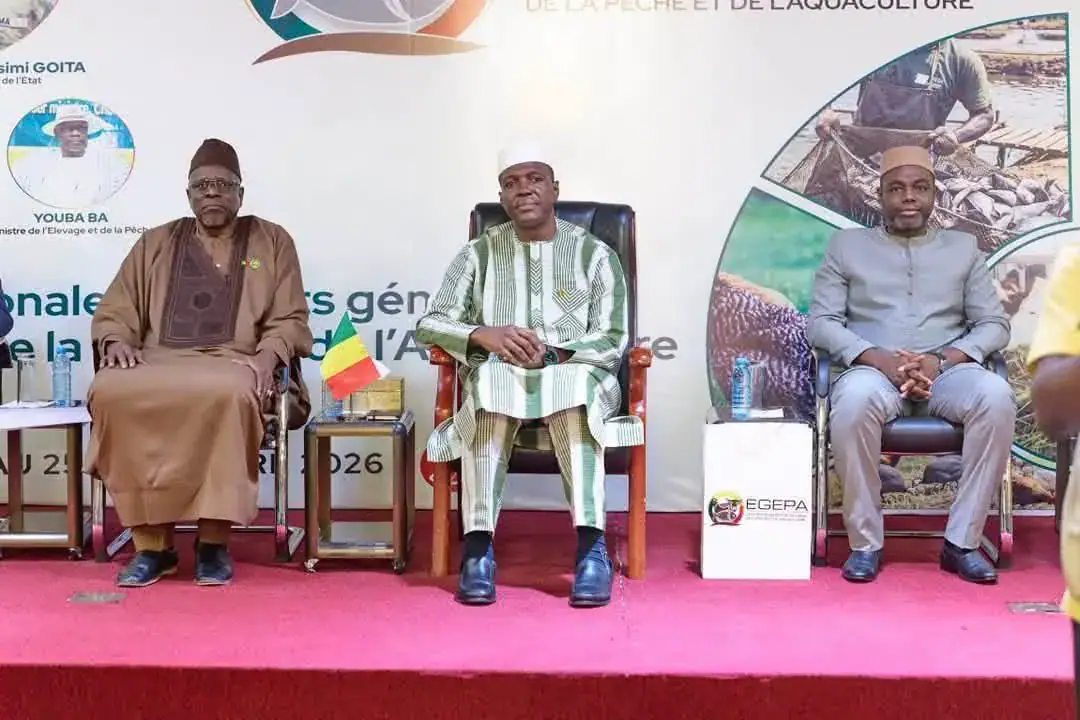
Mali's Prime Minister Abdoulaye Maiga chaired the opening ceremony of the General Assembly of Livestock and Fisheries on November 23. The assembly aims to define strategic orientations for modernizing animal, fisheries, and aquaculture sectors. This will enhance food and nutritional sovereignty in Mali. The event was held under the high patronage of the Transition President. A national commission led by Dr. Modibo Traoré organized the assembly.
The ceremony saw participation from representatives of the Sahel Alliance states, including Burkina Faso and Niger, as well as Guinea. The Food and Agriculture Organization (FAO) representative expressed satisfaction with the assembly and reaffirmed the organization's commitment to supporting the government. The goal is to find sustainable solutions for the population's benefit. Mali's livestock and fisheries sectors have significant potential, with vast arable lands.
The Minister of Livestock and Fisheries, Youba Ba, emphasized that the General Assembly reflects a strong political will. It addresses demands from rural actors and highlights the importance of modernizing these sectors. This modernization is crucial for achieving food and nutritional sovereignty. The sectors play a strategic role in the national economy, job creation, and commercial exchanges.
The assembly's theme is "Modernizing Animal, Fisheries, and Aquaculture Sectors in Mali for Food and Nutritional Security." The discussions focus on five priorities: improving economic performance, promoting sustainable resource management, empowering women and youth, strengthening institutional appropriation, and consolidating partnerships. The Prime Minister urged participants to prioritize realistic goals with effective implementation mechanisms.
The government aims to develop concrete recommendations for sustainable transformation of the livestock and fisheries sectors. The Prime Minister reaffirmed the state's commitment to implementing the recommendations from the assembly. The event brings together various stakeholders, including local authorities, technical services, and professional organizations. Their input will help shape the future of Mali's livestock and fisheries sectors.
The Sahel Alliance states' participation demonstrates regional collaboration and shared interests in sustainable development. The FAO's involvement ensures that international best practices and expertise inform the modernization process. Mali's efforts to modernize its livestock and fisheries sectors have the potential to improve food security and boost economic growth.
The General Assembly of Livestock and Fisheries will conclude with recommendations for the government's consideration. Implementing these recommendations will require collaboration among stakeholders, including local communities, government agencies, and international partners. The success of these efforts will depend on effective coordination and resource allocation.
Key points
- The General Assembly aims to modernize Mali's livestock and fisheries sectors to achieve food and nutritional sovereignty.
- The event brought together representatives from Sahel Alliance states and international organizations like the FAO.
- The assembly's recommendations will focus on sustainable development and regional collaboration.