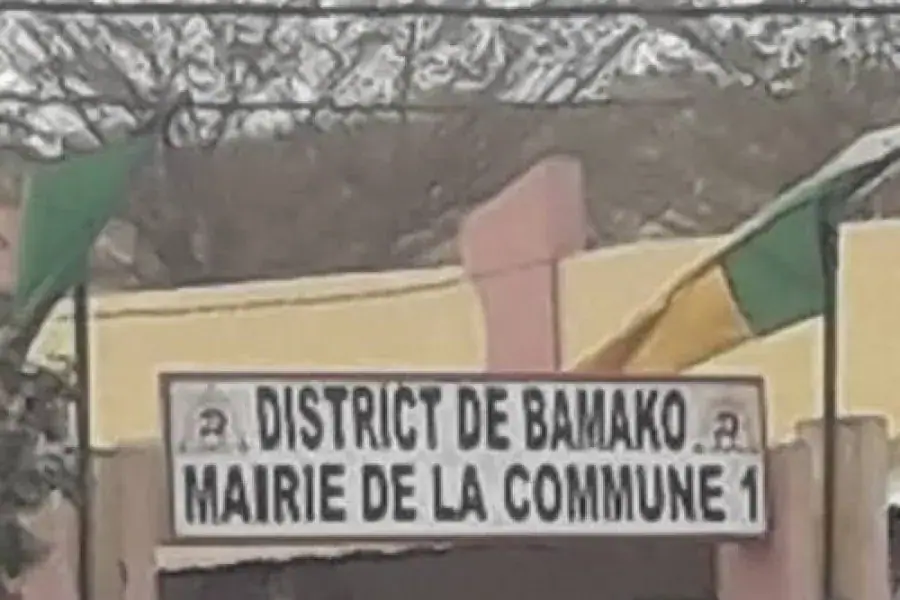
The Malian government has taken the decision to dissolve the Commune I council in Bamako's District, effective October 23. This move comes after identifying several administrative and land management irregularities. The decision is in line with the Code des collectivités territoriales, which allows for such action against councils found to be mismanaging their duties.
According to the government, irregularities included unauthorized land subdivision, recognition of land rights, issuance of notifications for land use for housing, and mismanagement of ordinary and emphyteutic leases. Additionally, there were allegations of collecting premiums on marriage celebration fees. Prior to the dissolution, the council was given the opportunity to provide explanations.
The dissolution of the council is one of the sanctions provided by law, specifically law n°2023-004. The law mandates that a council must be allowed to provide written explanations before such a decision is made. The decree for dissolution is issued by the Council of Ministers, based on a proposal from the minister responsible for territorial collectives.
Following the dissolution, a special delegation will be established to temporarily manage the commune's affairs. This process is standard and aims to ensure continuity in the commune's services, including handling ongoing dossiers and verifying contested acts. The case raises questions about the effectiveness of existing control mechanisms over communal activities.
The Direction générale des Collectivités territoriales (DGCT) is responsible for overseeing communal activities. This includes a priori control of budgetary acts and a posteriori control of administrative acts. The control focuses on legality rather than the appropriateness of decisions made by elected officials.
The DGCT is currently updating its control guide to adapt to recent administrative and territorial reorganizations. The new guide emphasizes administrative and financial control, as well as providing support and advice to collectives. The Commune I case provides a practical example to assess the efficiency of these control mechanisms.
Digitalization is seen as a potential tool to enhance oversight. The DGCT was working on computerized tools for monitoring decentralization and integrating financial control modules into software for collectives. Centralized registration of land decisions, leases, and recognized rights could facilitate verifications between communal acts and state-held data.
Key points
- The Malian government dissolved the Commune I council due to administrative and land management irregularities.
- The dissolution is part of a broader process to ensure accountability and legality in communal management.
- Digital tools are being explored to enhance monitoring and control of communal activities.