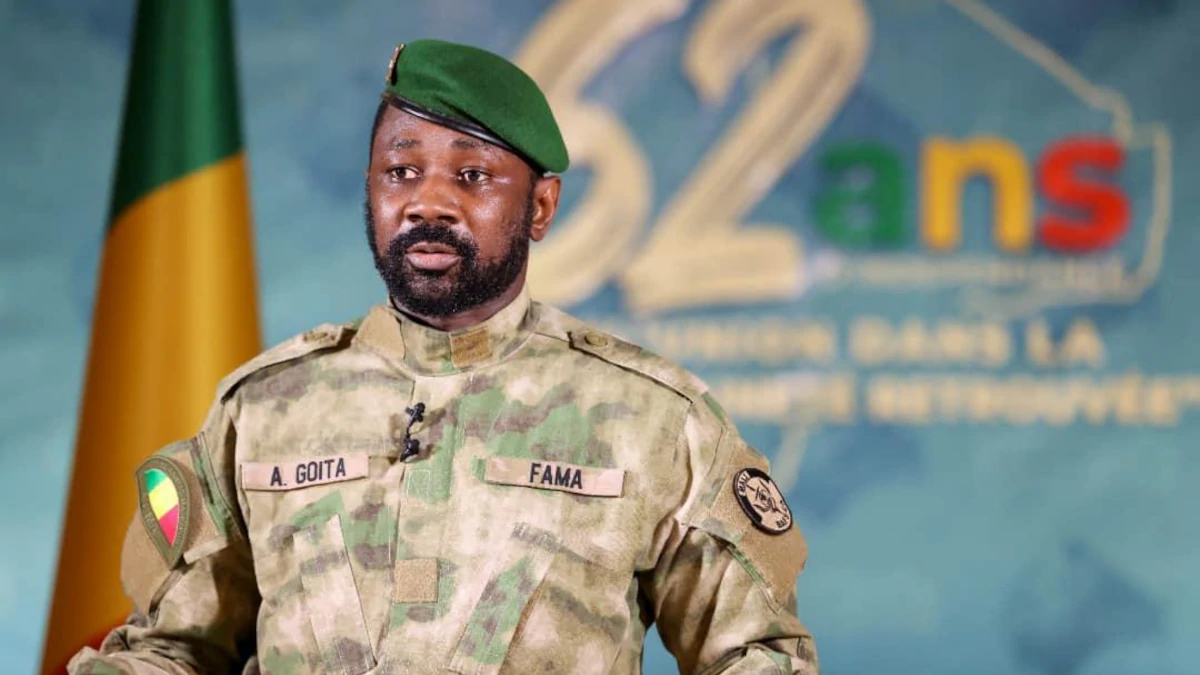
The Malian armed forces, known as FAMa, have regained control of the northern city of Kidal, following the withdrawal of the Front de libération de l'Azawad (FLA). On October 6, 2026, the FLA announced its retreat from the city in a statement signed by its spokesperson, Mohamed Elmaouloud Ramadane. According to the FLA, the withdrawal was a "strategic and controlled retreat" aimed at preserving its human and logistical capabilities.
The FLA had controlled Kidal for five months and eleven days, having taken the city on April 25, 2026. The city's return to government control comes less than three years after the Malian army first retook it in November 2023. The FLA's withdrawal followed a series of airstrikes by the Malian military on October 5, which targeted armed groups in the Kidal region. The FLA accused the Malian army and its Africa Corps allies of using disproportionate aerial force.
The FLA, which was formed in November 2024 through the merger of several Tuareg and Arab movements in northern Mali, claims its withdrawal was necessary to protect civilians. The group alleges that the airstrikes destroyed much of the city's public and civilian infrastructure. However, these claims have not been independently verified. The FLA's leader, Alghabass Ag Intalla, maintains that the group's fight for Azawad will continue.
According to reports from Jeune Afrique, the Malian army and Africa Corps entered Kidal after the FLA's departure. The FLA had initially taken control of the city in alliance with the Groupe de soutien à l'islam et aux musulmans (Jnim), a Sahelian branch of Al-Qaeda. The group's statement described its withdrawal as a "temporary operational measure" aimed at preserving its capabilities.
The FLA's decision to withdraw from Kidal was motivated by concerns for the safety of civilians. The group claims that its forces retreated without engaging in direct combat with enemy forces, which it accuses of avoiding immediate ground contact. The FLA vows to continue its struggle for Azawad, promising to pursue its goals "with constancy and determination."
The Malian government's efforts to regain control of Kidal are part of a broader strategy to stabilize the country's north. The region has been plagued by conflict and extremist violence in recent years. The FLA's withdrawal and the Malian army's takeover of Kidal are likely to have significant implications for the region's security dynamics.
The FLA's future plans and the Malian government's response to the group's continued insurgency remain unclear. One thing is certain, however: the conflict in Mali's north is far from over. The situation on the ground will continue to be closely watched by regional and international observers.
Key points
- The Malian army has retaken control of Kidal following the FLA's withdrawal.
- The FLA cites airstrikes and civilian protection concerns as reasons for its retreat.
- The group's withdrawal is a "strategic and controlled retreat," according to its statement.