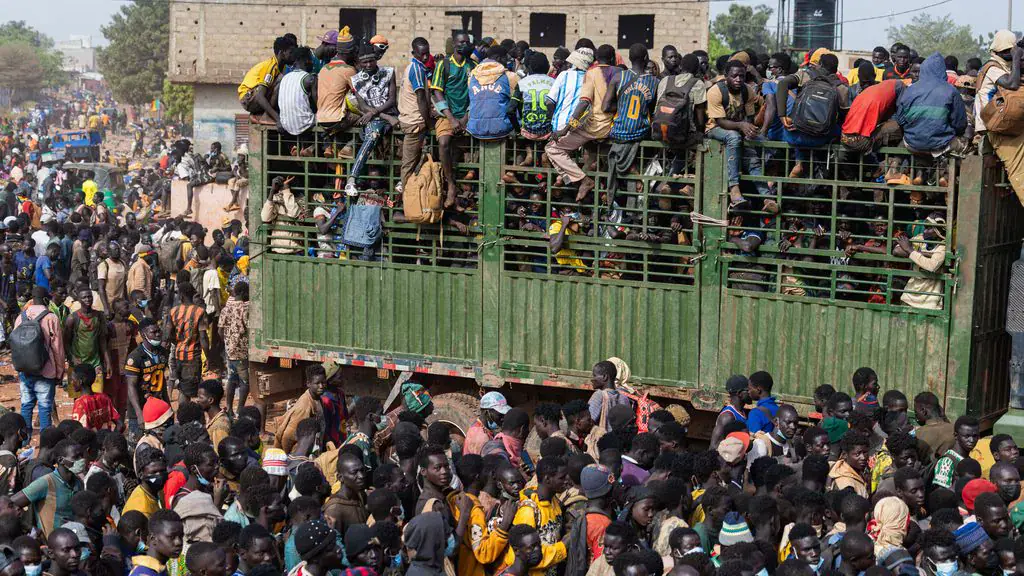
The Malian government is struggling to cope with an influx of thousands of people expelled from Guinea, where authorities have cracked down on artisanal gold mining. The expelled individuals, mostly from Burkina Faso, are facing dire conditions in Mali, with many lacking access to basic necessities like food and shelter. According to the Malian Ministry of Health, around 160,000 people have been received in Mali since the beginning of the expulsions, with 100,000 of them in the capital city of Bamako.
The situation on the ground is chaotic, with many of the expelled individuals forced to march for days without adequate food or water. Alassane Kaboré, a 21-year-old Burkinabè, recounted his ordeal, saying that he was forced to walk 125 kilometers to Bamako with little food or water. Many have been separated from their families, and some have given birth to babies along the way. The Malian government has set up temporary shelters to accommodate the expelled individuals, but conditions are harsh, with many people forced to sleep on the ground.
The expulsion of artisanal miners from Guinea is part of a broader effort by the Guinean government to crack down on informal mining activities. The government has deployed security forces to enforce the ban on artisanal mining, leading to the expulsion of thousands of miners. However, the move has also raised concerns about the humanitarian impact on the affected communities. The Malian government has appealed for international assistance to cope with the crisis.
The crisis has also raised concerns about security, with many of the expelled individuals being vulnerable to recruitment by terrorist groups. The Malian government is working with international partners to provide assistance to the affected communities and to mitigate the security risks. According to a senior government official, the situation is being closely monitored, and efforts are being made to ensure that the expelled individuals are not exploited by terrorist groups.
The Burkinabè government has begun to repatriate its citizens, with 37,136 people having been brought back home since the beginning of the crisis. Other countries, including Côte d'Ivoire, have also promised to repatriate their citizens. However, many of the expelled individuals are still stranded in Mali, with limited access to basic necessities.
The Malian government has estimated that it will need around 228 million francs CFA (approximately $347,000) to respond to the humanitarian crisis. The government is working with international partners to secure funding and assistance to cope with the crisis. The situation remains dire, with many of the expelled individuals facing an uncertain future.
The crisis has highlighted the complex relationships between Guinea and Mali, with both countries facing significant development challenges. The two countries have a long history of cooperation, but the current crisis has strained relations. The Malian government has called for calm and urged the Guinean government to engage in dialogue to resolve the crisis.
Key points
- The Malian government has received around 160,000 people expelled from Guinea since the beginning of the crisis.
- The situation on the ground is dire, with many of the expelled individuals lacking access to basic necessities like food and shelter.
- The crisis has raised concerns about security, with many of the expelled individuals being vulnerable to recruitment by terrorist groups.