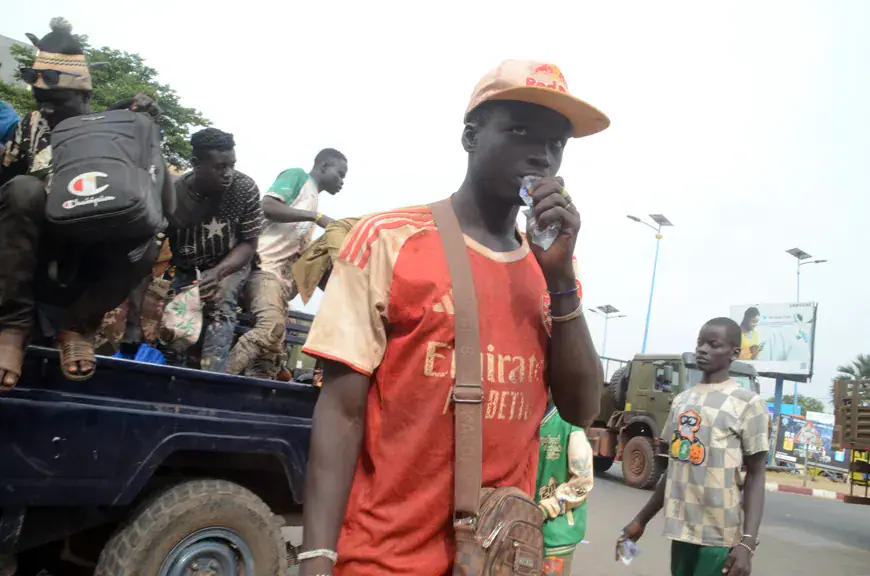
Thousands of artisanal miners, mostly from Burkina Faso, have been forced to leave their mining sites in Guinea's Siguiri region after the local authorities suspended their activities on October 29. The decision was made due to environmental degradation, water pollution, and the use of machinery incompatible with artisanal mining. As a result, many foreign nationals have headed to Mali, where their arrival has mobilized the Malian and Burkinabé authorities to organize their reception and return.
The situation has created a humanitarian crisis, with many of the miners facing uncertainty about their future. Yacouba Sawadogo, a Burkinabé miner, recounted his experience of being forced to leave a mining site near Siguiri without prior notice. He claims that his equipment was destroyed or burned, and that some of his colleagues were robbed or subjected to violence. However, these allegations have not been confirmed by the Guinean authorities, who assert that their operations target illegal mining and must respect human rights.
The Malian authorities, in collaboration with the Burkinabé government, are working to provide assistance to the stranded miners. The Center for Crisis Coordination and Management held an emergency meeting to coordinate the reception and transportation of the miners back to their countries of origin. The Burkinabé government has also dispatched a delegation to Bamako to assess the situation and provide support.
The needs of the miners are pressing, with food, shelter, and transportation being top priorities. The Malian government's efforts are focused on addressing these immediate needs, while also working to facilitate the miners' return to their home countries. The Burkinabé embassy in Bamako, which also covers Guinea, has become a hub for the stranded miners, with hundreds of people waiting for repatriation.
The Association of Burkinabé Residents in Mali and the Burkinabé Workers' Union in Mali have launched appeals for contributions to support the stranded miners. According to Jean-Paul Ouattara, president of the Amicale des travailleurs burkinabè au Mali, buses have been mobilized to transport the miners back to Ouagadougou. So far, a dozen buses have departed from Bamako, with many more expected to follow.
Some of the miners, like Siaka Ouattara, who has lived in Mali for five years, are calling for a more comprehensive response to the crisis. He believes that the situation requires a humanitarian approach, involving not only governments but also humanitarian organizations. The Malian and Burkinabé governments are working together to address the crisis, but it remains to be seen whether their efforts will be sufficient to support the thousands of affected miners.
As the situation continues to unfold, the international community is watching closely. The crisis highlights the complexities of artisanal mining in West Africa, where economic and environmental concerns often intersect. For now, the focus remains on providing support to the stranded miners and finding a solution to their plight.
Key points
- The Guinean authorities suspended artisanal mining in the Siguiri region on October 29, citing environmental concerns.
- The Malian and Burkinabé governments are working together to provide assistance to the stranded miners.
- The crisis has created a humanitarian situation, with thousands of miners facing uncertainty about their future.