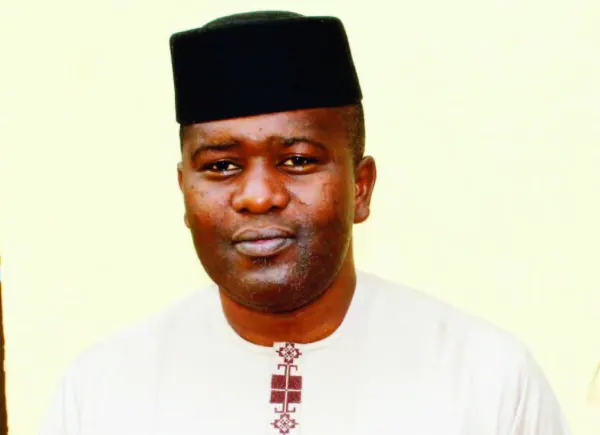
Dr Ahmadou Touré, a lecturer-researcher at the University of Kurukanfuga of Bamako, has published a new book titled "Souveraineté et refondation étatique au Mali : Vers l’Alliance des États du Sahel". The book analyzes Mali's refoundation process, which began on August 18, 2020. Dr Touré examines whether the transition reforms have allowed for a real reconquest of national sovereignty and laid the foundations for more autonomous governance.
The book is divided into three parts. The first part reconstructs the foundations of the rupture, presenting the 2020 crisis as a succession of simultaneous events, including insecurity in the north and center, contestation of the regime of former President Ibrahim Boubacar Keïta, corruption, youth unemployment, and the COVID-19 shock. The National Committee for the Salvation of the People (CNSP), led by Colonel Assimi Goïta, is described as a popular and military surge.
Dr Touré highlights the instruments of the transition, including the Charter of the Transition and the National Assemblies of Refoundation. He notes that the July 22, 2023 Constitution, adopted by referendum, reaffirms the unitary state, strengthens the Executive, institutes a Senate, and anchors the text in the heritage of West African empires. The book also mentions the Strategic Framework for Refoundation of the State (2022-2031) and the Mali Kura 2063 vision, which transform this project into long-term planning.
The second part of the book evaluates the reconquest of territory. Dr Touré reveals that the modernization of the Malian Armed Forces (FAMa), recruitment, drones, air support, and tactical groups prepared the resumption of Kidal on November 14, 2023, symbolizing the end of de facto occupation and the Algiers Agreements. He also discusses the return of administration and the limits of this initiative, including insufficient personnel, community mistrust, and budget constraints.
The book also examines the adaptation of threats, including attacks on April 25, 2026, which resulted in the loss of several people, including former Minister of State and Minister of Defense, General Sadio Camara. Dr Touré notes that the "integrated defense" protocol and Operation "Dougoukoloko" illustrate the transition from territorial reconquest to a war of attrition.
The third part of the book expands the framework to the Sahel region. Dr Touré highlights the adoption of the Liptako-Gourma Charter on September 16, 2023, which establishes the Alliance of Sahel States (AES) between Mali, Burkina Faso, and Niger. He notes that this Alliance is gradually transforming into an operational confederation, with a unified force, investment bank, permanent secretariat, and parliament in gestation.
Dr Touré's book offers a dense synthesis of a moment when Mali attempted to link national sovereignty and Sahelian solidarity. The book is available from the author and Éditions "Prostyle" for 15,000 Fcfa. Key points include the analysis of Mali's refoundation process, the evaluation of territorial reconquest, and the examination of the Alliance of Sahel States.
Key points
- Dr Ahmadou Touré's book provides an in-depth analysis of Mali's refoundation process and its implications for national sovereignty and regional stability.
- The book highlights the progress made in territorial reconquest, including the resumption of Kidal, and the challenges that remain.
- The Alliance of Sahel States is presented as a key development in regional cooperation and stability.