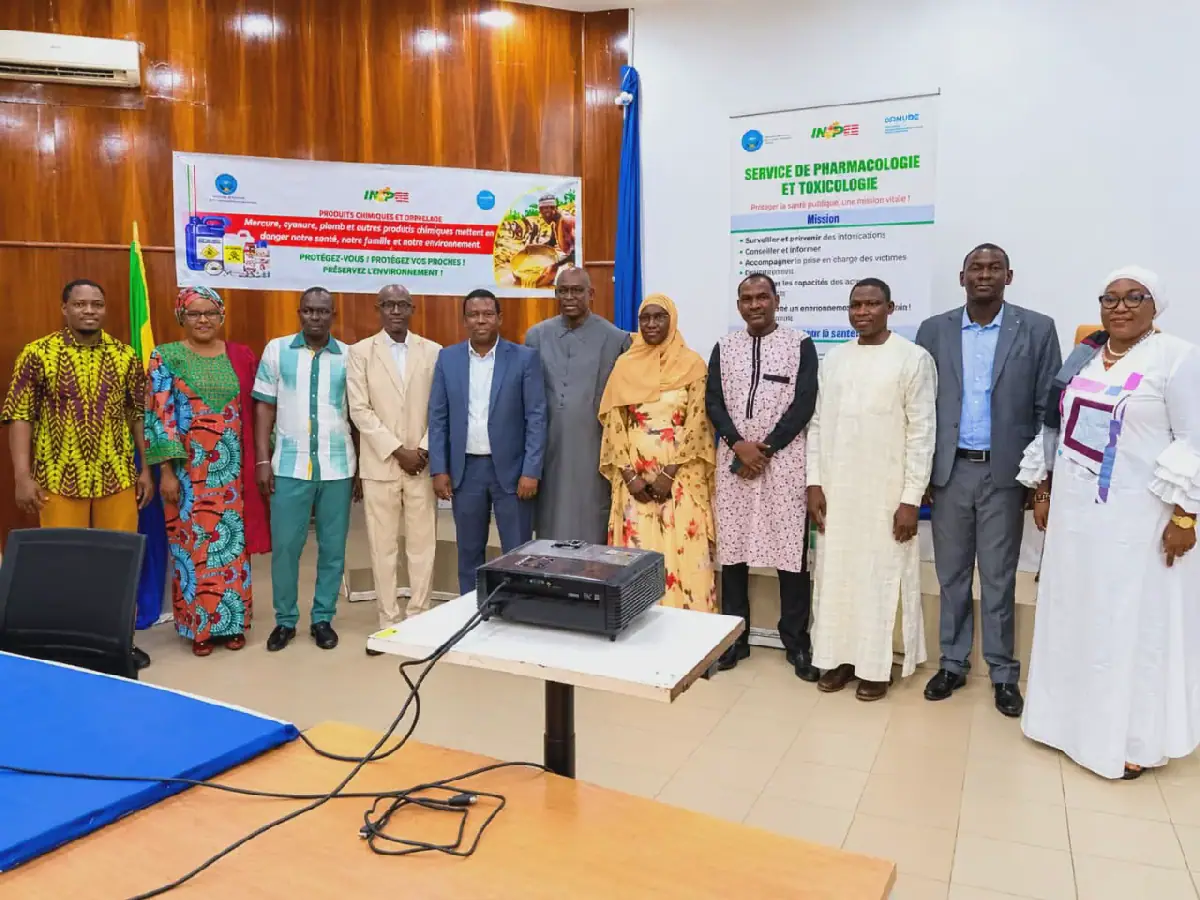
The Malian government has taken a significant step towards addressing the growing concern of chemical poisonings in the country. On November 5, 2026, the Ministry of Health and Social Development, through the National Institute of Public Health (INSP), presented a national strategic plan to combat chemical poisonings from 2027 to 2031. This plan aims to strengthen prevention and management mechanisms, which are crucial given the alarming rates of poisoning, especially among children under five and pregnant women.
Chemical poisoning is a significant public health risk in Mali, primarily due to the use of pesticides in agriculture, artisanal gold mining activities, and the improper handling of household chemicals. These activities expose populations to substances that can cause severe health complications. The new strategic plan focuses on six key areas to enhance protection and promote a healthy and secure environment. These areas include prevention, care, institutional environment, intra- and multisectoral coordination, financing and resource mobilization, and monitoring and evaluation.
The first axis of the plan focuses on prevention by equipping health structures and actors involved in the fight against chemical poisoning. It includes awareness, communication, and capacity-building programs for operators, handlers, and users of chemical products, with particular attention to women, children, and the school environment. This proactive approach aims to reduce the incidence of chemical poisoning by educating those most at risk and those who can influence change.
The plan's second axis aims to improve care by strengthening the operational capacities of healthcare providers and services, enhancing the management of poisoning cases, and consolidating the capacities of the Pharmacology and Toxicology Service. This will ensure that victims receive timely and effective treatment, reducing the severity of poisoning cases and saving lives.
Institutional strengthening is another critical component, with the third axis focusing on improving the institutional, legislative, and regulatory framework. It also involves creating an antipoison center to enhance response to poisoning situations. Effective coordination across different sectors is also crucial, with the fourth axis promoting a "One Health" approach to ensure collaboration between health programs and other intervention sectors.
The plan's fifth axis addresses financing and resource mobilization, which is essential for sustainability. This involves advocacy, roundtable discussions, and mobilization activities to secure support from technical and financial partners, local authorities, civil society organizations, and the private sector. The final axis focuses on monitoring and evaluation, utilizing health information systems and the "One Health" platform to track activities and assess results.
The implementation of this strategic plan will be coordinated at both central and regional levels, involving various stakeholders to ensure its effectiveness. By addressing the root causes of chemical poisoning and improving response mechanisms, Mali aims to significantly reduce the incidence and impact of chemical poisoning by 2031.
Key points
- The plan focuses on six strategic axes: prevention, care, institutional environment, coordination, financing, and monitoring and evaluation.