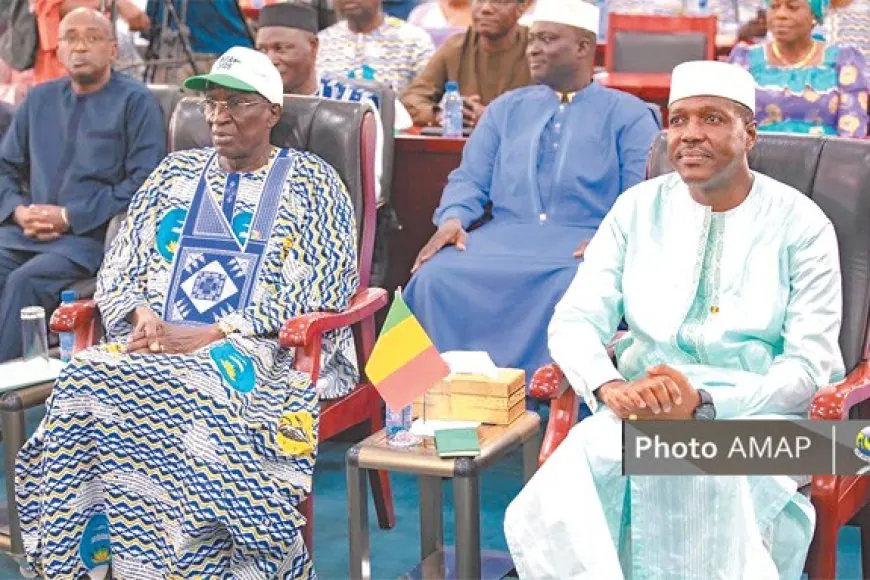
The International Conference Center in Bamako, Mali, hosted the official launch of International Literacy Day (ILD) on September 17, 2026. The event was presided over by Prime Minister Abdoulaye Maïga, with several government ministers in attendance. The international theme for ILD was "Literacy for People, Planet, and Prosperity," while the national theme was "Literacy in the Service of a Successful Year of Education and Culture."
According to Aly Sinane, representative of UNESCO in Mali, literacy is a fundamental right and a powerful tool for transforming lives, economies, and societies. He noted that significant progress has been made globally in recent decades, with youth literacy rates increasing from 75% to 93% between 1975 and 2004, and adult literacy rates rising from 65% to 88% during the same period.
Despite these advances, Sinane highlighted that 273 million children and young people worldwide are not enrolled in school, and many 10-year-olds struggle to read and understand simple texts. Additionally, an estimated 737 million adults lack basic reading and writing skills, with two-thirds of these individuals being women. UNESCO remains committed to supporting Mali in implementing its national strategy for emergence and sustainable development.
Malian Minister of National Education, Amadou Sy Savané, emphasized that literacy extends beyond basic reading, writing, and arithmetic skills. It is a means of empowerment and the foundation of a sovereign society. Literacy centers combine information, literacy, and vocational training to provide socio-economic integration opportunities for learners. Currently, 426 education centers care for 6,333 learners, including 2,649 girls and 3,684 boys.
The four female learning centers, known as "cafés," provide training to approximately 540 learners under the guidance of 38 instructors, including 28 women. Minister Savané stressed the importance of valuing Mali's official languages as a means of learning and giving the population the keys to their own history and future. He believes that successful literacy must be linked to socio-cultural realities and provide perspectives on contemporary global issues.
Prime Minister Abdoulaye Maïga stated that celebrating International Literacy Day is an opportunity to recall that reading, writing, and calculating are fundamental rights and powerful tools for sustainable development. He emphasized that literacy is an instrument for empowering populations, preserving cultural heritage, promoting social cohesion, and fostering responsible citizenship. In Mali's current context, marked by security, economic, climate, and technological challenges, literacy appears as a strategic response.
Maïga noted that literacy enables women to strengthen their economic and social autonomy, provides young people with new professional integration perspectives, improves agricultural, health, and environmental practices, and facilitates access to public services and digital innovations. The Prime Minister concluded that literacy is an essential tool for reconnecting Malians with their history and promoting national identity.
Key points
- Literacy is a fundamental right and a powerful tool for transforming lives, economies, and societies.
- Mali has made significant progress in literacy, with 426 education centers caring for 6,333 learners.
- The government aims to emphasize the importance of literacy in the country's development and cultural identity.