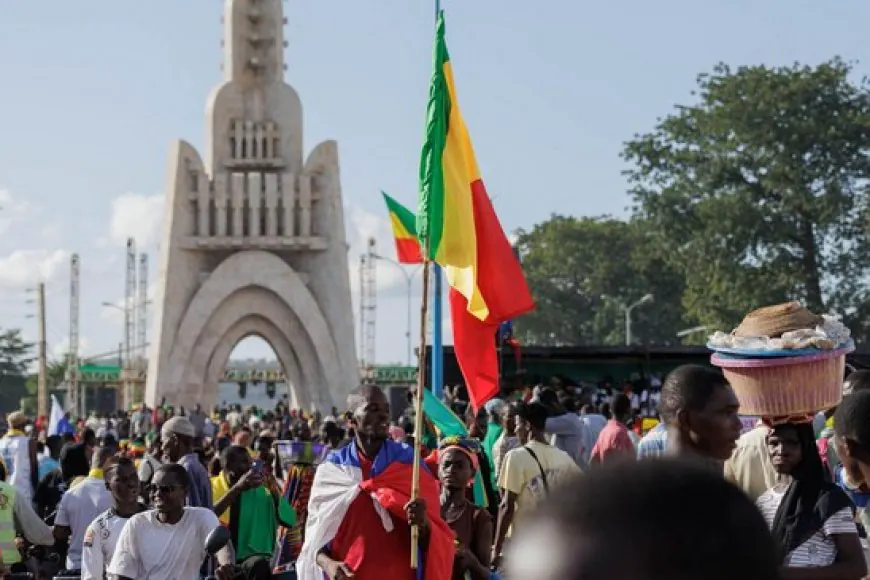
On 22 September 1960, the country then known as French Sudan, gained its independence, marking a significant milestone in its history. The journey to independence was long and arduous, with the people of French Sudan seeking self-governance and an end to colonial rule. The day was a culmination of years of struggle, hope, and determination.
In the lead-up to independence, the people of Bamako and beyond demonstrated their enthusiasm and anticipation. On the evening of 21 September 1960, a torchlight procession traversed the city's quarters, accompanied by music and chants. The procession was a testament to the growing desire for change and the birth of a new nation.
The following morning, delegates from across French Sudan gathered at the Collège technique de Bamako, now known as the Lycée technique, for an extraordinary congress of the Union Soudanaise-RDA. The atmosphere was charged, with discussions centered on the future of the country. The great dream of a Mali Federation with Senegal had recently collapsed, and a new path forward had to be determined.
Modibo Keïta, the secretary-general of the Union Soudanaise-RDA, addressed the gathering, his words imbued with a sense of purpose and vision. The congress ultimately decided to request that the Legislative Assembly reassume the powers transferred to the Federation, declare French Sudan an independent and sovereign state, and adopt a new name: Mali.
The name "Mali" was not just a change in nomenclature but a reclaiming of the country's history and identity. It evoked memories of the great empires of West Africa, including the legendary Soundiata. The people of Mali sought to define themselves, rather than being defined by their colonial past.
As the congress concluded, the delegates proceeded to Bagadadji, where the Legislative Assembly was in session. At 11:25 am, the Assembly adopted the foundational texts, and French Sudan officially became the Republic of Mali. The birth of the new nation was met with jubilation, as Bamako and beyond erupted in celebration.
For Modibo Keïta, independence was not an end but a beginning. He envisioned a future where Mali would not only be politically independent but also economically self-sufficient. The struggle for African unity would continue, and Mali would play its part in shaping the continent's future.
Key points
- The 22 September 1960 marked Mali's independence from French colonial rule and the birth of a new nation.
- The country's first leader, Modibo Keïta, played a pivotal role in shaping Mali's future and advocating for African unity.
- The name "Mali" represents a reclaiming of the country's history and identity, evoking memories of the great empires of West Africa.