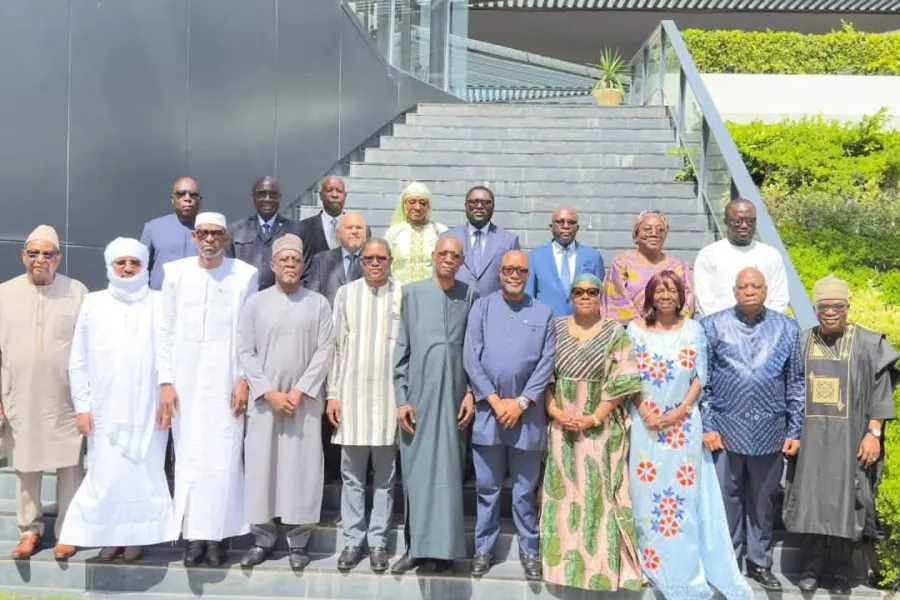
The first ministerial meeting between the Economic Community of West African States (ECOWAS) and the Alliance of Sahel States (AES) was held in Dakar, Senegal, on October 17, 2026. This meeting marked a significant step towards reviving dialogue between the two organizations after a period of strained relations. The ECOWAS delegation was led by Cheikh Niang, Senegal's Minister of Foreign Affairs and President of the ECOWAS Council of Ministers. The AES delegation was headed by Karamoko Jean-Marie Traoré, Burkina Faso's Minister of Foreign Affairs and President of the AES Ministerial Committee.
The meeting resulted in a joint communiqué, which outlined the commitment of both organizations to establish joint thematic working groups. These groups will focus on technical exchanges with the aim of concluding a cooperation framework agreement between ECOWAS and AES. The working groups are expected to submit their results to the ministers for consideration before the next session. While the communiqué did not specify the exact themes or timelines for the working groups, it emphasized the importance of cooperation in areas such as the free movement of persons and goods, commercial exchanges, and security.
The talks in Dakar represent a significant shift in the relationship between ECOWAS and AES, which has been strained since the withdrawal of Mali, Burkina Faso, and Niger from ECOWAS in 2025. The meeting demonstrated a willingness on both sides to engage in dialogue and explore opportunities for cooperation. According to the joint communiqué, the two organizations have agreed to preserve the gains of regional integration and work towards a stronger partnership.
The establishment of joint working groups is seen as a crucial step towards strengthening cooperation between ECOWAS and AES. The groups will focus on key areas such as trade, security, and migration, with the aim of promoting economic integration and stability in the region. While several issues remain outstanding, including the free movement of persons and goods, commercial exchanges, and security cooperation, the two organizations have expressed their commitment to working together.
The meeting in Dakar was seen as a positive development by observers, who believe that closer ties between ECOWAS and AES could help to promote regional stability and economic growth. The two organizations have a combined population of over 400 million people and a combined GDP of over $700 billion. A stronger partnership between ECOWAS and AES could help to unlock the economic potential of the region and promote greater cooperation on security and other issues.
The next step for ECOWAS and AES will be to finalize the details of the joint working groups and agree on a timeline for their establishment. The two organizations have also agreed to maintain a high level of communication and coordination in the coming months. While challenges remain, the meeting in Dakar has raised hopes that ECOWAS and AES can work together more effectively in the future.
The outcome of the meeting in Dakar has been welcomed by stakeholders, who believe that closer ties between ECOWAS and AES are essential for promoting regional integration and stability. The two organizations have a critical role to play in promoting economic growth, security, and stability in West Africa, and their partnership is seen as crucial for addressing the region's development challenges.
Key points
- The ECOWAS and AES have agreed to establish joint thematic working groups to promote cooperation and revive dialogue.