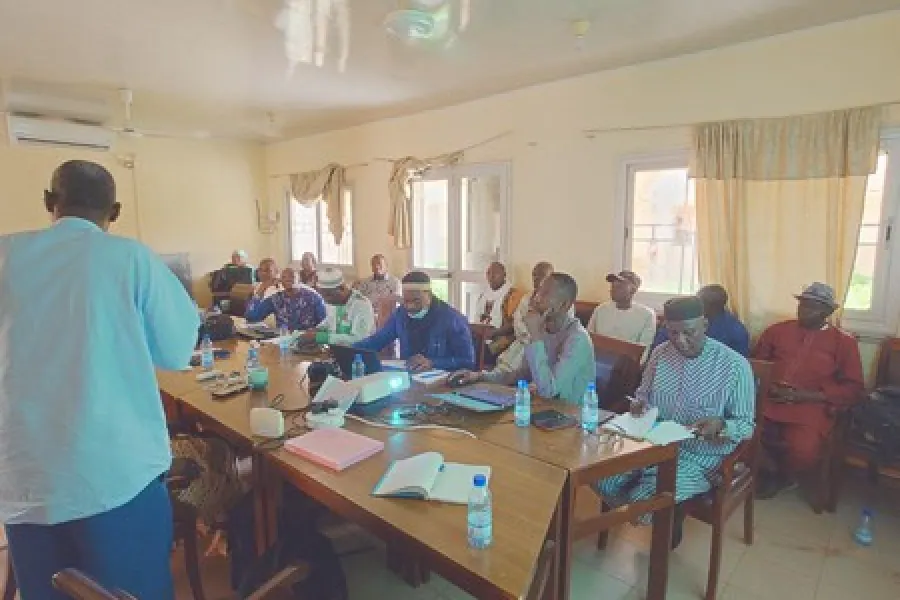
In Mali, the Coordination of Actions for Development (CAD-Mali) and Oxfam have partnered to evaluate the organizational and institutional capacities of four implementing partners. The evaluation, which took place from October 6-7, 2026, in Koulikoro, is part of the closure of the DGD22-26 program. The program, titled "Improving Food Security, Livelihoods, and Resilience of Women," aimed to strengthen the incomes, power, and influence of 1,600 women in the regions of Koulikoro, Koutiala, and Ségou.
The DGD22-26 program focused on women's empowerment and resilience, with a specific approach to address the crisis context in Mali. The program supported 800 internally displaced persons (IDPs) in the Ségou region and worked with three value chains: milk, rice, and soybeans. According to Nouhoum Konaté, project manager, the program aimed to improve the lives of women and enhance their resilience. The evaluation used the 5C methodology, which assesses an organization's capacity to engage and act, obtain development results, relate to others, adapt and renew, and maintain coherence.
Moctar Coulibaly, Oxfam's program manager, stated that the program is a continuation of the DGD 2017-2021 initiative. The program's Result 5 focuses on developing the institutional and organizational capacities of partner organizations to strengthen their power and influence. Oxfam played a facilitator role, supporting the partners in five areas: self-diagnosis, analysis of internal constraints, securing women's access to production factors, structuring basic groups, and supporting family farms.
Alamir Touré, President of CAD-Mali, emphasized that the evaluation aimed to assess the progress made by partner organizations since the 2022 diagnostic and identify areas for improvement. The evaluation will inform the development of new capacity-building plans for the future. The assessment used the 5C model to measure the evolution of capacities, analyzed changes in governance and partnerships, and documented best practices and success factors.
The evaluation consisted of four separate workshops, each with 28 participants, including leaders, members, and technicians from the organizations, as well as Oxfam Mali team members. These workshops marked a crucial step in drawing lessons from the DGD22-26 program and building stronger, more resilient, and influential peasant and women's organizations for the years to come.
According to CAD-Mali, the objective of the evaluation was to appreciate the evolution of capacities, measure the level of implementation of the 2022-2026 capacity-building plans, analyze changes in governance and partnerships, document best practices, and identify success factors or blockages. The evaluation also aimed to define priority needs for the next five years.
The partnership between CAD-Mali and Oxfam demonstrates a commitment to supporting the development of strong and resilient organizations in Mali. The evaluation's findings will inform the development of future programs and capacity-building initiatives, ultimately contributing to improved food security, livelihoods, and resilience for women and communities in Mali.
Key points
- CAD-Mali and Oxfam assess organizational capacities of partners in Mali
- The evaluation used the 5C methodology to assess organizational capacities
- The program aimed to improve the lives of 1,600 women in Mali's Koulikoro, Koutiala, and Ségou regions