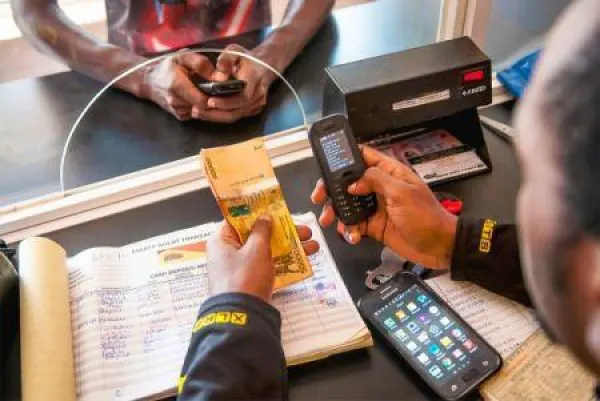
The West African Economic and Monetary Union's (UEMOA) central bank, BCEAO, has revised the rules for its Payment and Settlement Infrastructure for Interoperable Transactions (PI-SPI) system. The new rules allow banks, fintechs, and mobile money operators to charge fees of up to 0.8% for transactions. This change comes as Wave, a major mobile money player, joins the PI-SPI network. The revised rules aim to balance the needs of users and service providers.
Under the revised rules, receiving money remains free, regardless of the amount. However, transactions exceeding a certain threshold will incur fees. The BCEAO set a daily cumulative threshold, rather than a per-transaction fee, to encourage low-value transactions while allowing providers to earn revenue from larger transactions. This change is expected to maintain free transactions for around 75% of electronic money transactions in the UEMOA.
The revised rules are part of BCEAO's strategy to make PI-SPI the primary platform for transfers between different networks. From November, interoperable electronic money transactions must go through PI-SPI. By June 2027, the same tariff rules will apply to transfers between the eight UEMOA countries. Wave's entry into the PI-SPI network is significant, as it has built its success on low transfer fees.
Wave's business model, which relies on high volumes and low prices, posed a challenge to the free interoperability of PI-SPI. The revised rules aim to find a balance between protecting small users and allowing providers to earn revenue. The BCEAO wants to ensure that the infrastructure is not economically neutral for providers, who must connect, secure, and maintain it.
The BCEAO's strategy goes beyond transfers, focusing on payments and encouraging electronic transactions. In September, the bank approved new technical interfaces for businesses, enabling them to make payments, settle invoices, and send payment requests. PI-SPI is expanding to facilitate merchant payments and corporate transactions.
The electronic money sector is growing rapidly in UEMOA. In 2025, supervised electronic money institutions had 172.9 million accounts, with transactions valued at 164,169 billion Fcfa. The sector's net result almost tripled to 16.9 billion Fcfa. The BCEAO aims to increase electronic transactions and reduce reliance on cash.
The entry of Wave into the PI-SPI network marks a new phase in the battle for electronic transactions. The BCEAO's goal is to increase the circulation of money within the digital system, reducing the need for cash. With Wave on board, the competition is set to intensify, driving innovation and growth in the electronic payments sector.
Key points
- BCEAO revises PI-SPI rules to allow fees up to 0.8% for transactions.
- Wave joins PI-SPI network, expanding its reach in UEMOA.
- Revised rules aim to balance user needs and provider revenue.