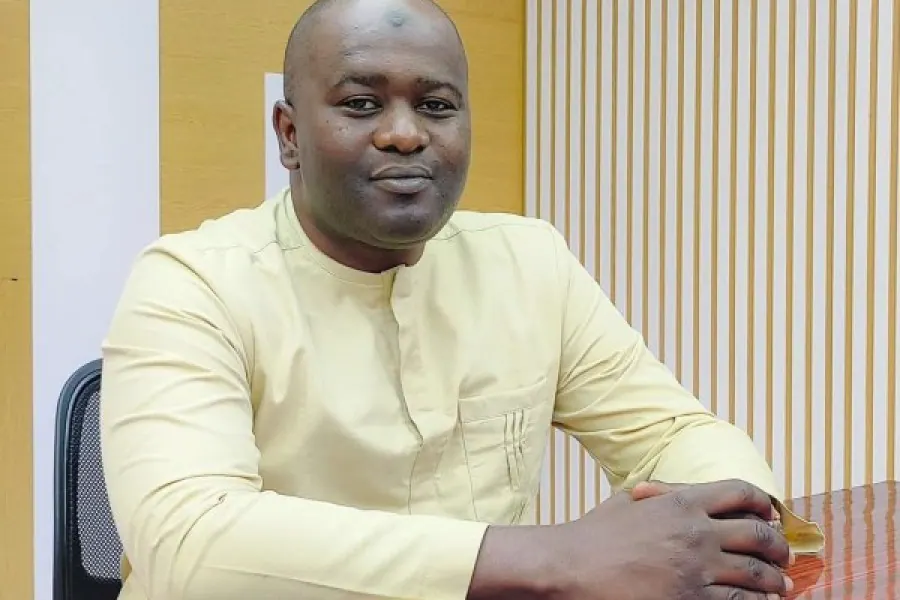
At the 81st United Nations General Assembly, Mali's Foreign Minister Abdoulaye Diop delivered a significant speech on behalf of President Assimi Goïta, highlighting the country's stance on sovereignty and cooperation. Dr. Ahmadou Touré, director of the Center for Research on Governance, Mediation, and Security in the Sahel, analyzed the speech as a clear statement of Mali's doctrine on autonomy and strategic partnerships. The speech marked a notable shift in Mali's diplomatic approach, emphasizing national sovereignty and criticizing external interference.
Dr. Touré's analysis revealed that Diop's speech was a strong denunciation of external interference in the Sahel region, particularly from Ukraine, which Mali accuses of supporting terrorist groups operating in the region. The minister recalled that Ukraine's support for these groups was evident as early as 2024, and that this interference has had severe consequences for Mali's security. The speech also highlighted the tragic ambush that resulted in the death of Mali's Defense Minister, General Sadio Camara.
According to Dr. Touré, Diop's speech was not only a critique of external interference but also a call for African solidarity. The minister emphasized that the Sahel region cannot be reduced to a mere humanitarian issue or a theater for geopolitical instrumentalization. Dr. Touré noted that many African capitals have been criticized for their silence and inaction in the face of these security challenges, and that Mali's speech was a challenge to these countries to take a more active role in supporting the Sahel region.
Dr. Touré also highlighted the significance of Mali's rejection of traditional multilateral approaches, particularly with regard to the United Nations. The minister's speech was seen as a frontal challenge to the UN's traditional approaches, which Mali views as ineffective and biased. Dr. Touré noted that Mali's stance is not about isolationism but about asserting its sovereignty and demanding a more equitable and effective international order.
The speech also outlined Mali's new economic and strategic paradigm, which emphasizes autonomy and self-reliance. Dr. Touré noted that the minister's speech highlighted the importance of mobilizing domestic resources, transforming local wealth, and investing in youth and artificial intelligence. This approach is seen as a departure from traditional donor-recipient relationships and a bid to assert Mali's sovereignty in economic and strategic matters.
Dr. Touré cautioned that while Mali's ambitions are clear, the success of this new approach will depend on the government's ability to deliver on its promises, particularly in terms of security and territorial control. The expert noted that the true test of Mali's sovereignty will be its ability to protect and secure its territory, and that the international community will be watching closely to see if Mali can translate its rhetoric into concrete action.
In conclusion, Dr. Touré noted that Mali's speech at the UN General Assembly has set out a clear contract for political and strategic partnerships. The expert identified three possible outcomes for the region: consolidation of the Sahel Confederation, reform of the UN Security Council and UNOWAS, or failure of the Sahel Confederation. Ultimately, Dr. Touré argued that the ball is now in the court of the African continent and the international community to respond to Mali's call for solidarity and cooperation.
Key points
- Mali's Foreign Minister Abdoulaye Diop delivers a strong message at the 81st UN General Assembly, emphasizing national sovereignty and criticizing external interference.