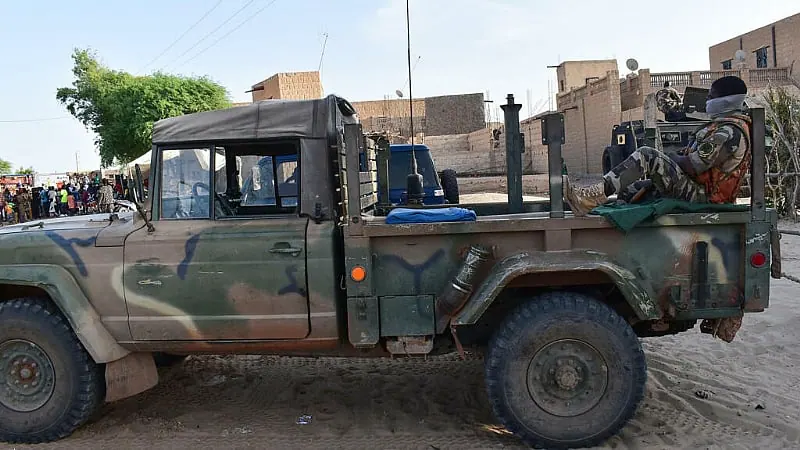
Amnesty International has released a report detailing war crimes committed by Mali's armed forces and Russian Wagner Group personnel during joint operations between 2023 and 2025. The report, entitled No One is Spared, documents the killing of at least 34 civilians in seven locations in the central Ségou and Mopti regions and northern Timbuktu region. None of those killed were directly participating in hostilities at the time, the rights organisation said.
The victims were from Fulani, Arab and Tuareg pastoral communities living in areas affected by fighting between government forces and armed groups. Many were killed while attempting to flee or after being arrested, while others had their throats slit or were burnt alive or after their deaths. Some people appear to have been suspected of links to armed groups based largely on their ethnic background or simply because they remained in areas where such groups operate.
The Malian army and Wagner Group conducted joint patrols in the regions, with the military authorities turning to Russia for security support after taking power in coups in 2020 and 2021. Wagner formally ended its operations in Mali in June 2025 and was replaced by Africa Corps, which is linked directly to Russia's defence ministry. The report also documents torture, enforced disappearances, looting and two drone strikes that killed at least 23 civilians, including five children.
Amnesty investigated two drone strikes in the Timbuktu region during 2025. One struck a weekly market at Ejdeir on 16 March, killing 16 people and injuring others. Survivors interviewed by Amnesty said there were no combatants or military targets at the site. The Malian army said at the time that it had “neutralised” a gathering of suspected militants in the area.
Amnesty also interviewed 15 men who said they had been tortured or otherwise ill-treated during joint patrols or while detained at the military bases of Léré and Nampala. Their accounts included beatings with iron bars, suspension by the arms, simulated drowning and electric shocks. Witnesses told Amnesty that they had seen 30 people tortured during patrols or at the bases and that five people died as a result of torture or poor detention conditions.
Amnesty says abuses against civilians have continued in 2026, despite the period covered by the investigation ending in December last year. The organisation sent its findings to Mali's transitional authorities on 3 August but had received no response by the time the report was published. International avenues for accountability have also narrowed, with Mali notifying its withdrawal from the International Criminal Court's founding Rome Statute in June.
The UN refugee agency had registered more than 290,000 Malian refugees in the Mauritanian region bordering Mali by the end of July. Amnesty interviewed 119 Malian refugees during its investigation, with many having little option but to flee across the border into Mauritania due to the ongoing abuses.
Key points
- At least 34 civilians were killed in seven locations in Mali between June 2023 and December 2025.
- Amnesty International documents torture, enforced disappearances, looting and two drone strikes that killed at least 23 civilians.
- Mali's armed forces and Russian Wagner Group personnel committed war crimes against civilians during joint operations.