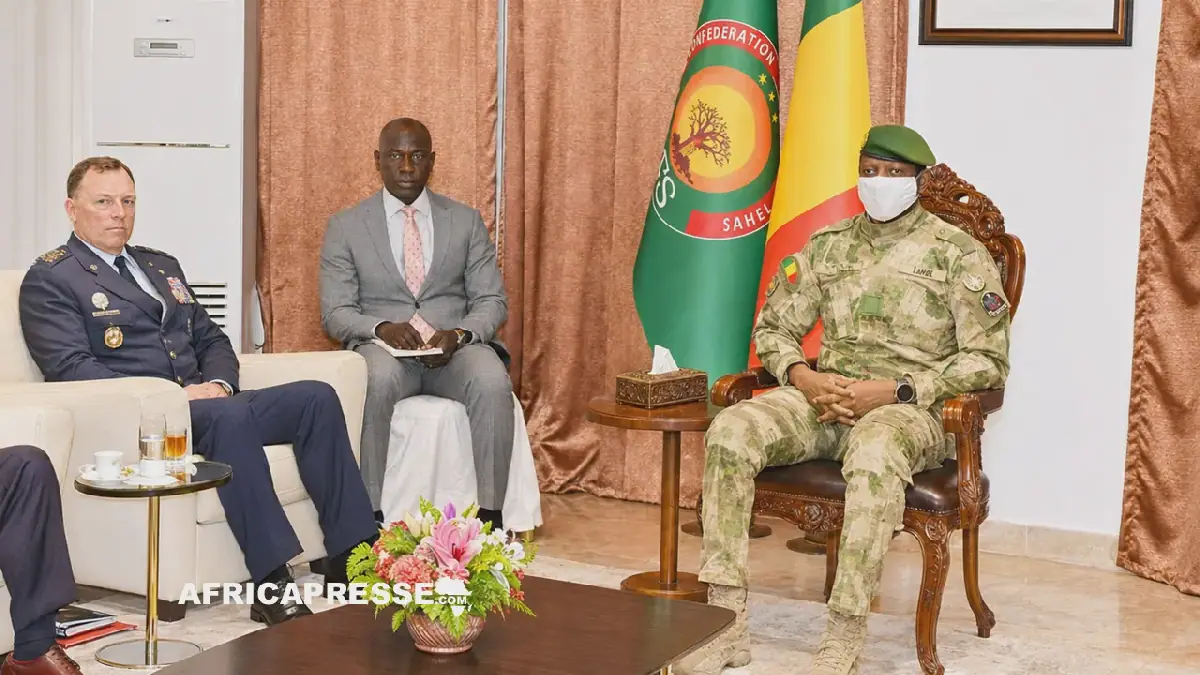
On November 10, 2026, Mali's transitional president, Assimi Goïta, hosted a meeting with Dagvin Anderson, commander of the United States Africa Command (AFRICOM), in Bamako. The encounter took place on the sidelines of the Bamako International Defense and Security Exhibition (BAMEX 2026). According to AFRICOM, the two officials discussed the pressing issue of terrorism in the Sahel region and explored possibilities for enhanced security cooperation between Mali and the United States.
The meeting between Goïta and Anderson marked a significant development in Mali-US relations, which had cooled considerably following the 2020 and 2021 power changes in Bamako. These changes had led to the suspension of several US security assistance programs in Mali. Anderson's visit signaled a US effort to reestablish dialogue on regional security challenges, despite Mali's strengthened military ties with Russia. During the meeting, Anderson emphasized the convergence of views on terrorism threats and the need for common responses.
AFRICOM's commander reiterated Washington's willingness to support Mali in its fight against terrorist groups, while also expressing potential backing for other Sahel countries facing similar threats. Anderson stressed the importance of respecting the independence and sovereignty of states in cooperation efforts. According to reports, Goïta was the first Sahel head of state to meet with Anderson's team as part of this initiative.
The security landscape in Mali and the broader Sahel region remains complex, with the influence of Russian military support in Bamako presenting a challenge to renewed US engagement. No concrete agreement or details on potential US support were announced following the meeting. The exploratory nature of the encounter suggests caution, with Washington seemingly intent on repositioning its dialogue with Bamako without making firm commitments.
The meeting between Goïta and Anderson sends a significant political signal, as it demonstrates Mali's ability to engage with Washington despite its strengthened ties with Russia. For the US, the visit indicates a desire not to cede the Sahel region to other powers, given the ongoing threat posed by jihadist groups across the Sahelian belt. The fact that Mali's transitional president was the first Sahel head of state to meet with AFRICOM's commander underscores the strategic interest Washington attaches to Bamako.
The audience with Goïta was attended by Mali's minister delegate to the minister of defense and veterans, General Oumar Diarra. On the same day, Goïta also received Abass Mohamadi, Iran's deputy minister of defense for industrial and research affairs, who was in Bamako for BAMEX 2026. This series of meetings highlights the diversification strategy pursued by Malian authorities, who are engaging with various actors with divergent interests.
The implications of this renewed US engagement in Mali's security affairs remain to be seen, particularly regarding the potential for concrete security gains or the extent to which this diplomacy will yield tangible results. The meeting between Goïta and Anderson has sparked questions about the future nature of Mali-US cooperation, with many observers watching closely for signs of more substantial US involvement in the region's security dynamics.
Key points
- The meeting between Mali's transitional president Assimi Goïta and AFRICOM commander Dagvin Anderson marked a significant step in reestablishing security dialogue between Mali and the United States.
- The discussions focused on addressing terrorism threats in the Sahel region and potential security cooperation between the two nations.
- The encounter signals a US effort to reengage with Mali despite its strengthened military ties with Russia, with implications for regional security dynamics.