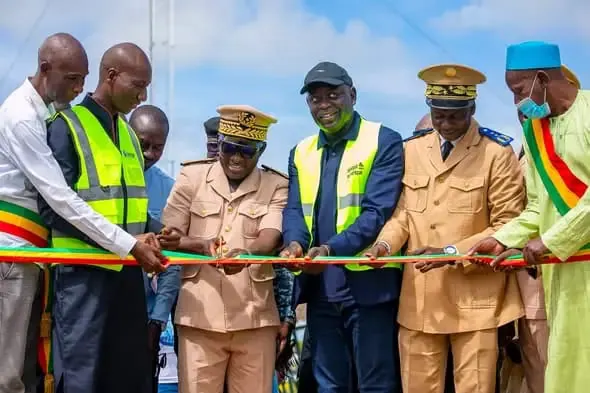
On October 5, 2026, Mali and Senegal took a significant step towards achieving regional digital sovereignty by interconnecting their fiber optic networks. This development aims to mitigate the impact of frequent internet disruptions that have been a recurring issue in Africa. The connection between Kidira, Senegal, and Diboli, Mali, marks a crucial milestone in the region's quest for technological independence.
The interconnected networks of Mali and Senegal provide a high-level safety net, enabling data to be redirected in the event of an infrastructure failure. This means that internet traffic can continue uninterrupted, reducing the economic impact of internet disruptions on the region. The project, facilitated by the Réseau ouest-africain des Backbones (ROA-BN), is a significant step towards creating a more resilient and secure internet infrastructure in West Africa.
Historically, internet traffic in West Africa has been vulnerable to disruptions due to the region's reliance on undersea cables and limited terrestrial connectivity. The interconnection of Mali and Senegal's networks helps to address this issue by creating a redundant system that can maintain internet connectivity even in the event of a disruption. This development has significant implications for the region's economic growth and digital development.
The project also marks a significant shift towards regionalizing internet traffic, reducing the need for data to be routed through European servers. This not only reduces costs but also enhances security by minimizing the risk of data breaches and cyber attacks. By taking control of their internet infrastructure, Mali and Senegal are setting a precedent for other African countries to follow.
The interconnection of Mali and Senegal's networks is a key component of the region's broader strategy to achieve digital sovereignty. The project demonstrates the importance of regional cooperation and solidarity in achieving technological independence. By working together, West African countries can create a more secure, resilient, and reliable internet infrastructure that supports the region's economic growth and development.
The Senegalese and Malian governments have recognized the strategic importance of this project, designating the connection points as high-security sites critical to national security. This move underscores the significance of digital infrastructure in supporting economic development and national security in the region.
The interconnection of Mali and Senegal's fiber optic networks is a significant milestone in the region's quest for digital sovereignty. The project has the potential to transform the region's digital landscape, enhancing the security, reliability, and resilience of internet connectivity. As the region continues to develop its digital infrastructure, this project serves as a model for future collaborations and initiatives.
Key points
- The interconnection of Mali and Senegal's networks provides a high-level safety net, enabling data to be redirected in the event of an infrastructure failure.
- The project marks a significant shift towards regionalizing internet traffic, reducing the need for data to be routed through European servers.
- The interconnection of Mali and Senegal's networks demonstrates the importance of regional cooperation and solidarity in achieving technological independence.