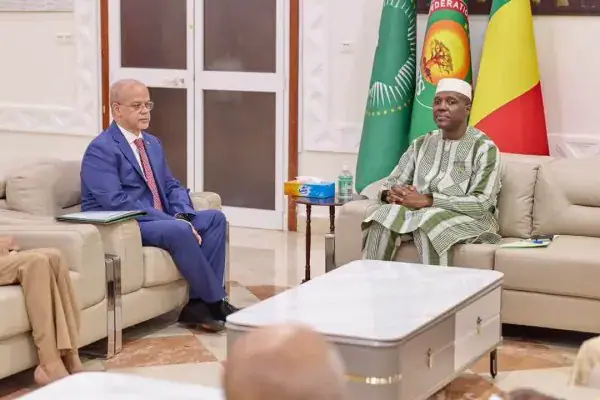
Mali and Morocco are bolstering their strategic cooperation with several new initiatives. The two countries have been strengthening their bilateral relations since Mali withdrew its recognition of the Sahrawi Republic. This cooperation includes the provision of scholarships, training for imams and students, and a donation of 1,000 tons of fertilizers. Additionally, a new power plant in Bamako is planned, further solidifying their partnership.
The Malian government has been actively engaging with Morocco to enhance their cooperation. The ambassador of Morocco to Mali has invited General Abdoulaye Maïga to meet with the Moroccan head of government. This meeting aims to foster closer ties between the two nations. Furthermore, the ambassador highlighted the upcoming opening of the Dakhla port, a significant infrastructure project that will allow landlocked Sahel countries, including Mali, to access the Atlantic Ocean.
The Dakhla port project is a key component of the strategic vision shared by King Mohammed VI of Morocco and General Assimi Goïta of Mali. This project is expected to boost trade and economic cooperation between the two countries. The port will provide a vital link for Mali and other landlocked nations to access international markets. This development is seen as a major breakthrough in the region.
In addition to the port project, Mali has been focusing on its internal development. The country recently launched the World Antimicrobial Resistance Awareness Week. The campaign, themed "One Health, One Action: Act Now to Prevent AMR," aims to raise awareness about the growing threat of antimicrobial resistance. This initiative demonstrates Mali's commitment to addressing global health challenges.
Mali has also made significant strides in education and security. The Université Bazo has obtained two international certifications, ISO 9001:2015 and ISO 21001:2018, showcasing its commitment to quality education. On the security front, the Malian army has been conducting operations against terrorist groups in various parts of the country. These efforts are part of a broader strategy to enhance national security.
The Malian army has recently acquired new equipment to enhance its capabilities. The President of the Transition, General Assimi Goïta, handed over a batch of aerial equipment to the Malian Armed Forces. This development marks a significant milestone in Mali's defense strategy, as the country continues to build its military capacity. The new equipment includes an Ilyushin Il-76 transport aircraft and several helicopters.
The security situation in Mali remains a top priority for the government. The country has been facing threats from terrorist groups, and the military has been working to neutralize these threats. Recent operations in Kidal, Niono, and other areas have resulted in significant gains against terrorist forces. The government remains committed to ensuring the safety and security of its citizens.
Key points
- Strengthening bilateral cooperation with Morocco
- Enhancing military capabilities
- Addressing global health challenges