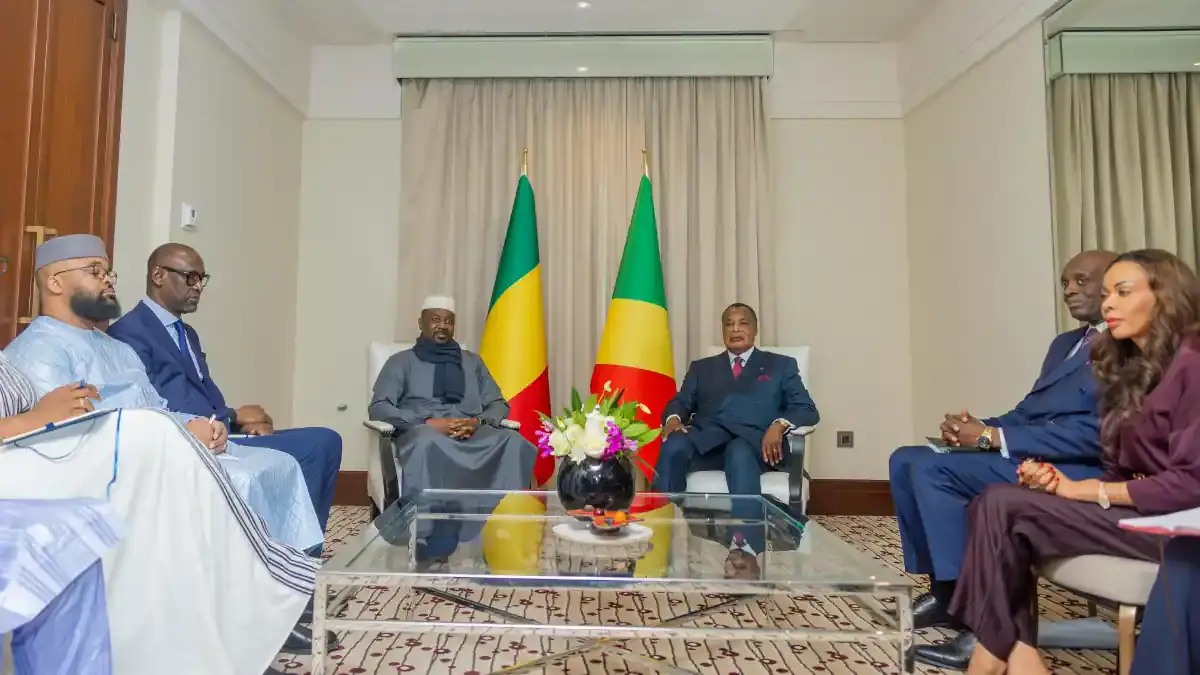
On the sidelines of the third Russia-Africa summit in Moscow, Malian President Assimi Goïta and Congolese President Denis Sassou-Nguesso held a meeting to address pressing security challenges facing the African continent. The discussions, which lasted over an hour, focused on diplomatic, security, and geopolitical issues of mutual concern. The two leaders stressed the need for enhanced solidarity among African nations to tackle the growing threats to regional stability. Their talks underscored the importance of cooperation in overcoming the complex security landscape.
The meeting between Goïta and Sassou-Nguesso comes at a time when the Sahel region continues to grapple with persistent armed violence. The two leaders acknowledged that the stability of the continent hinges on the ability of African states to prioritize cooperation over isolation. They emphasized that collective action and collaboration are crucial in addressing the multifaceted security challenges facing the region. This call for unity is particularly significant given the ongoing efforts to foster greater coordination among regional actors.
The conversation also touched on the need for strengthened cooperation between intelligence services and closer ties between regional organizations such as the Economic Community of West African States (ECOWAS) and the Alliance of Sahel States (AES). These issues were highlighted by the UN Secretary-General during a Security Council meeting on November 18, 2025, as critical components of a comprehensive response to terrorism. However, divergent political and diplomatic interests among regional organizations and governments have hindered the development of common solutions.
During the meeting, Goïta reiterated the guiding principles for Mali's partnerships, emphasizing the importance of respecting national sovereignty, the choices of the Malian people, and the country's national interests. This stance reflects Mali's commitment to maintaining its autonomy in international relations while seeking collaborative approaches to address shared security challenges. The exchange between Goïta and Sassou-Nguesso highlighted the intricate linkages between African cooperation, security, and the role of national sovereignty in international relations.
The discussions in Moscow are part of a broader effort to foster greater African cooperation in the face of evolving security threats. The Sahel region, in particular, has been plagued by armed violence and terrorist activities, underscoring the need for a unified and coordinated response. By emphasizing the importance of solidarity and cooperation, Goïta and Sassou-Nguesso are contributing to a growing chorus of voices calling for enhanced African collaboration to address these pressing challenges.
The meeting between the Malian and Congolese leaders also reflects a broader shift in global geopolitics, with African nations increasingly seeking to assert their interests and priorities in international relations. As the continent navigates complex security challenges and evolving global dynamics, the emphasis on African unity and cooperation is likely to remain a central theme in regional and international discourse.
As African nations continue to grapple with security challenges, the conversation between Goïta and Sassou-Nguesso serves as a reminder of the need for collective action and cooperation. By prioritizing solidarity and collaboration, African leaders can develop more effective responses to the complex security threats facing the continent and promote a more stable and secure future for all.
Key points
- The meeting between Goïta and Sassou-Nguesso emphasized the need for enhanced African cooperation to address security challenges.
- The two leaders stressed the importance of respecting national sovereignty in international partnerships.
- The Sahel region continues to face significant security challenges, including armed violence and terrorist activities.