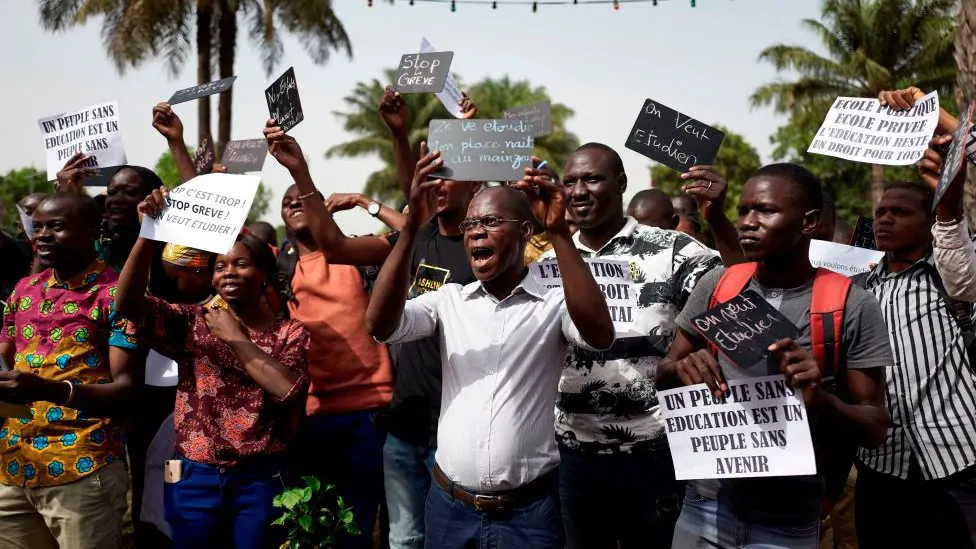
The start of the 2026 academic year has been marked by widespread protests and strikes by teachers across Africa. The situation is dire, with schools and universities remaining empty as educators demand better working conditions and payment of outstanding debts. This crisis is not limited to one region, with countries from the Maghreb to the Great Lakes and the Gulf of Guinea affected. The protests are a cry for help from a profession that feels undervalued and is struggling to make ends meet.
Teachers in Africa face similar challenges, including low salaries and poor working conditions. In Cameroon, the government owes teachers twenty years of unpaid academic debts, while in Kenya, a 4% salary increase has been met with criticism from unions who say it is insufficient to address the high cost of living. The situation is further complicated by the fact that education is often treated as a variable of adjustment in government budgets, rather than as a vital investment in the future.
The consequences of inaction by governments are severe. Every day of strike action results in a loss of human capital, as students from middle-class and upper-class families turn to private schools or seek education abroad. For those from more modest backgrounds, the closure of public schools means a higher risk of dropping out and being exposed to social ills. The situation in Libya is particularly concerning, where promises of salary increases made in 2018 have yet to be fulfilled.
The Nigerian situation is also dire, with the government blocking the career progression of educators in Abuja due to Kafkaesque administrative clauses. The cost of this inaction is exorbitant, with the future of millions of young people hanging in the balance. It is essential that governments rethink their approach to education and prioritize the needs of teachers and students.
Improving the working conditions of teachers is not just a concession to unions, but a strategic imperative. Teachers are the foundation of the future, and ignoring their legitimate demands will have severe consequences for the development of the continent. Governments must recognize the value of education and prioritize funding to ensure that schools can operate effectively.
The African continent is home to a large youth population, and education is essential to unlocking their potential. However, the current situation suggests that governments are not taking the issue seriously enough. In many countries, education is seen as a cost rather than an investment, and this approach is having severe consequences.
To address the crisis, governments must change their approach to education and prioritize funding. This requires a shift in mindset, with education seen as a vital investment in the future rather than a variable of adjustment in government budgets. The future of Africa's youth depends on it, and governments must act quickly to address the concerns of teachers and students.
Key points
- The protests by teachers across Africa highlight the need for governments to prioritize education and improve working conditions for educators.
- The consequences of inaction by governments are severe, with the future of millions of young people hanging in the balance.
- Improving the working conditions of teachers is not just a concession to unions, but a strategic imperative for the development of the continent.