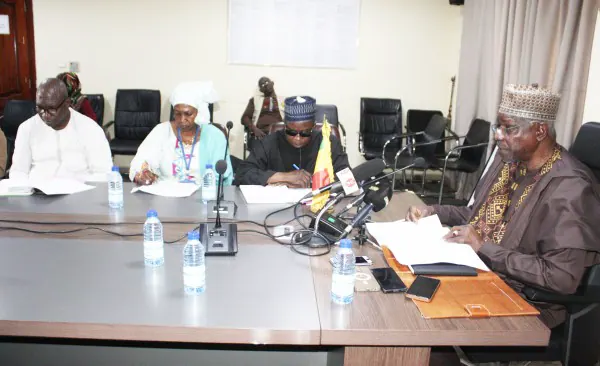
The Malian government has launched a five-year plan to secure the country's livestock sector, with an allocation of 8 billion FCFA. The plan, which runs from 2025 to 2029, aims to improve infrastructure and conditions for pastoralists, and to address the challenges facing the sector, including insecurity, climate change, and land pressure. The plan was discussed at the first session of the National Steering Committee for the Strategic Plan for the Development of the Livestock Sector, held in Bamako.
The committee, chaired by Minister of Livestock and Fisheries Youba Ba, brought together representatives from various government departments, technical services, and professional organizations. The minister emphasized the need for increased funding and mobilization of technical and financial partners to achieve the plan's objectives. He noted that the plan's success depends on the ability to mobilize resources and implement projects on the ground.
The plan provides for 600 million FCFA in funding for 2025 and 2026, and 7.4 billion FCFA for 2027-2029. The funds will be used to finance pastoral infrastructure, including hydraulic systems, and to create conditions for better securing of the livestock sector. Five hydraulic systems have already been completed in Koulikoro, and work is underway on 14 other systems in Koulikoro, Bougouni, and Kita.
The plan is part of a broader strategy to develop the livestock sector in Mali, which is a significant contributor to the country's economy. The sector faces several challenges, including insecurity on transhumance routes, climate change, and pressure on land and water resources. The government aims to stabilize and secure the livestock sector by 2034, with improved conditions for pastoralists and better management of resources.
The implementation of the plan will be monitored by the National Steering Committee, which will meet regularly to review progress and address challenges. The committee will also ensure that the plan is aligned with other initiatives aimed at developing the livestock sector in Mali. The government has already engaged in several initiatives to improve the sector, including the launch of the Programme Initiative Paysan +, which aims to support small-scale farmers and pastoralists.
The success of the plan will depend on the ability of the government and its partners to mobilize resources and implement projects on the ground. The plan's objectives are ambitious, and its implementation will require careful planning and coordination. However, if successful, the plan could have a significant impact on the livestock sector in Mali, improving conditions for pastoralists and contributing to the country's economic development.
The Malian government's commitment to securing the livestock sector is a positive step towards addressing the challenges facing the sector. The allocation of 8 billion FCFA over five years demonstrates the government's recognition of the importance of the sector and its potential for growth. With careful planning and implementation, the plan could help to stabilize and secure the livestock sector, improving conditions for pastoralists and contributing to the country's economic development.
Key points
- The Malian government has allocated 8 billion FCFA over five years to secure the country's livestock sector.
- The plan aims to improve infrastructure and conditions for pastoralists, and to address the challenges facing the sector.
- The implementation of the plan will be monitored by the National Steering Committee, which will meet regularly to review progress and address challenges.