The Malian government has set its sights on transforming the country's livestock, fishing, and aquaculture sectors into key drivers of economic growth, employment, and food sovereignty. With an abundance of pastoral and halieutic resources, the country aims to move beyond mere potential and unlock the full wealth-creating capacity of these industries. This ambitious endeavor was highlighted in a recent article in L'Essor, emphasizing the need for a comprehensive approach to harness the sector's vast potential.
To achieve this vision, the government is focusing on diversifying production sources and modernizing infrastructure. A case in point is the energy and water sector, where Minister of Energy and Water, Pr Tiémoko Traoré, outlined plans to improve access to clean water and electricity. During his appearance on the "Mali Kura Taasira 4" program, the minister emphasized the importance of upgrading infrastructure to enhance service delivery. This multi-faceted approach is expected to have a positive impact on the overall development of the country.
The agricultural sector is also undergoing significant transformations, with a strong emphasis on innovation and research. Recently, the 5th Open Day of the Agricultural Technology and Innovation Park at the Institute of Rural Economy (IER) showcased various agricultural innovations. These included high-yielding maize varieties, improved millet and sorghum varieties, and rice cultivation techniques adapted to climate change. The event brought together producers, researchers, and entrepreneurs to explore new opportunities and technologies.
The Malian government's efforts to modernize its sectors are not limited to agriculture and energy. The country is also actively involved in regional initiatives, such as the West African Economic and Monetary Union (UEMOA). The 12th annual review of Mali's performance within the UEMOA examined the country's progress in implementing community reforms and addressing persistent challenges. This review highlights the country's commitment to regional cooperation and its efforts to address development hurdles.
In addition to these domestic and regional initiatives, Mali is also playing an active role in international organizations, such as the Volta Basin Authority (ABV). The country's leadership of the ABV's Council of Ministers is expected to enhance regional cooperation and address common challenges. According to Robert Y. Dessouassi, Executive Director of the ABV, the institution is taking measures to revitalize its activities and address financial difficulties.
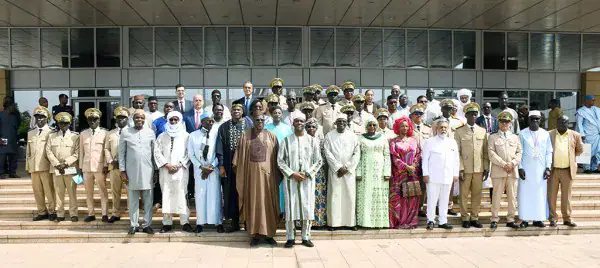
The 8th ordinary session of the ABV Council of Ministers, held in Bamako, brought together ministers from member countries to discuss key issues and strategic directions for the organization. The meeting was preceded by a technical committee meeting, which examined administrative, technical, and financial matters. These discussions aimed to strengthen the institution's capacity and improve its operations.
As Mali continues to drive sectoral modernization and regional cooperation, the country is also strengthening its financial management and oversight. The 27th statutory meeting of the UEMOA's financial jurisdictions, held in Bamako, focused on public finance control and good governance. This meeting underscores Mali's commitment to transparency and accountability in its financial management.
Key points
- The modernization of Mali's livestock, fishing, and aquaculture sectors is expected to create jobs and enhance food sovereignty.