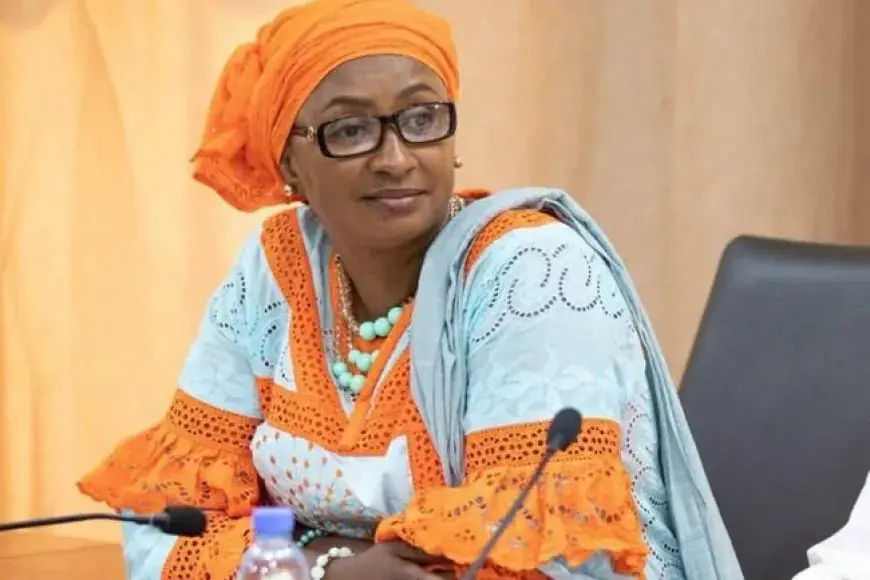
The Malian government has successfully negotiated with Senegalese and Ivorian port authorities to reduce or waive certain fees, resulting in approximately 80 billion FCFA in savings for Malian importers and exporters. This achievement was announced by Minister of Transport and Infrastructure, Dembélé Madina Sissoko, at the 17th Consular Assembly of the Malian Council of Shippers in Bamako. These savings are a direct result of the government's efforts to alleviate the financial burden on Malian traders.
The negotiations, led by the Malian Council of Shippers, aimed to address the issue of high port fees, which had been a major concern for Malian traders. The fees, which included penalties for delays and storage, had been accumulating over time, causing significant financial strain. According to Minister Sissoko, the government's intervention has led to the reduction or elimination of these penalties, resulting in substantial savings for Malian businesses.
This achievement is not an isolated incident, as similar efforts have been made in the past to support Malian traders. In 2016, the Port of Dakar implemented a three-month measure to waive fees for Malian goods that had been stranded at the port. This move was a response to the congestion caused by the poor condition of the Bamako-Dakar road and security concerns along the corridor. The measure provided relief to Malian traders who were struggling with the financial implications of storing goods at the port.
The Malian Council of Shippers has played a crucial role in facilitating these negotiations and advocating for the interests of Malian traders. The council's efforts have helped to reduce the financial burden on Malian businesses and improve the overall efficiency of trade between Mali and its neighboring countries. By working closely with government officials and port authorities, the council has been able to secure significant concessions that benefit Malian traders.
The savings achieved through these negotiations will likely have a positive impact on the Malian economy. With reduced port fees, Malian businesses can allocate more resources to other areas of their operations, such as investment in new technologies or expansion into new markets. This, in turn, could lead to increased economic growth and job creation in the country. Furthermore, the government's efforts to support Malian traders are likely to enhance the country's competitiveness in the region.
The issue of port fees has been a longstanding concern for Malian traders, who have faced significant challenges in recent years due to congestion and security concerns along the Bamako-Dakar corridor. However, the government's efforts to address these issues have shown positive results, with the latest achievement being a significant milestone in the ongoing efforts to support Malian traders. The Malian Council of Shippers has been instrumental in advocating for the interests of Malian traders and will likely continue to play a key role in future negotiations.
The government's efforts to support Malian traders are part of a broader strategy to promote economic growth and development in the country. By reducing the financial burden on Malian businesses, the government aims to create a more favorable business environment that will attract investment and stimulate economic growth. The achievement of nearly 80 billion FCFA in port fee savings is a significant step towards achieving this goal and demonstrates the government's commitment to supporting Malian traders.
Key points
- The Malian government has achieved nearly 80 billion FCFA in savings for Malian traders through negotiations with Senegalese and Ivorian port authorities.
Reporting sources
- Mali : près de 80 milliards de FCFA... · Maliweb.net