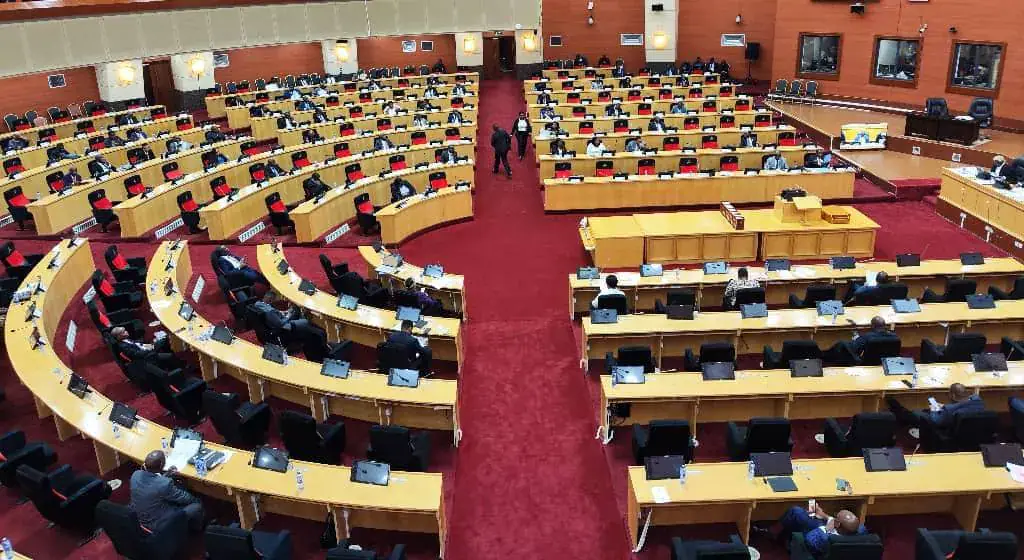
For 27 years, Malawians have expressed dissatisfaction with their Members of Parliament (MPs). According to Afrobarometer's latest survey, only 36 percent of Malawians approve or strongly approve of their MPs' performance. This trend has been consistent since 1999, with MP approval ratings never reaching 50 percent. The survey also found that 38 percent of Malawians disapprove of their MPs, while 26 percent are undecided.
The survey's findings indicate a deep and persistent disconnect between voters and their MPs. In 1999, 48 percent of Malawians perceived MPs to have performed well, but this rating dropped to 41 percent in 2003. The perception rating slightly picked up in 2005 but subsequently dropped to 32 percent in 2008. The ratings have fluctuated over the years, with a slight increase in 2019 to 44 percent, but dropping again to 35 percent in 2022 and slightly picking up to 38 percent in 2024.
Centre for Social Accountability and Transparency executive director Willy Kambwandira attributed the low approval ratings to a lack of visible service and accountability from MPs. He stated that MPs often become distant from their constituents once elected, and that they must hold regular constituency meetings, report publicly on their parliamentary work, and exercise rigorous oversight of public spending.
Political analyst Ernest Thindwa noted that several factors contribute to the low performance ratings, including structural issues, misconceptions about MPs' roles, and weak accountability mechanisms. He stated that MPs' main constitutional duties, such as enacting national legislation and providing oversight functions, do not have a direct bearing on their respective constituencies.
Thindwa also mentioned that the introduction of the Constituency Development Fund (CDF) may improve MPs' capacity to deliver on micro-development projects. However, he noted that a historical account of the fund reveals that not many constituencies can point to significant outcomes, exposing weak accountability mechanisms and the predatory nature of Malawian politics.
Governance commentator Undule Mwakasungula emphasized that MPs must remember their primary responsibility is to the people, not their political parties or leadership. He stated that MPs need to become more visible and accessible to their constituents, regularly engaging with communities, listening to their concerns, and following up on issues affecting people's lives.
Mwakasungula further argued that legislators' performance should be measured by their contribution to better accountability and development, not by political speeches and promises. He added that there is a greater need to strengthen Parliament's independence and oversight role, allowing MPs to perform their constitutional responsibilities without undue political interference.
Key points
- Only 36 percent of Malawians approve or strongly approve of their MPs' performance.
- The low approval ratings are attributed to a lack of visible service and accountability from MPs.
- MPs' performance should be measured by their contribution to better accountability and development.
Reporting sources
- 27 years later MPs still failing · The Nation