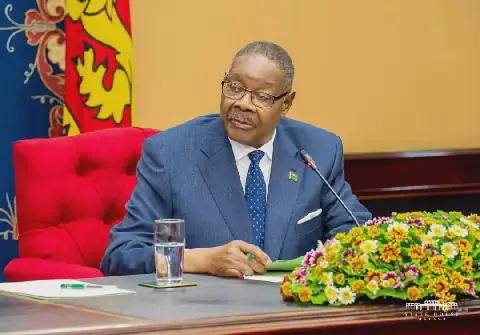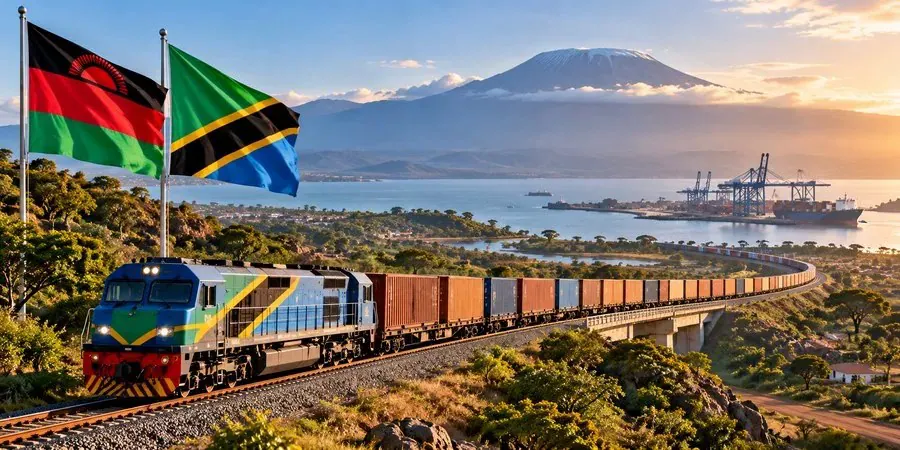
The proposed Malawi-Tanzania railway project is expected to significantly reduce trade costs for the landlocked nation of Malawi. The railway would provide a direct rail link to Dar es Salaam, one of the busiest ports in East Africa. This project is part of a broader effort to develop the northern railway corridor, with Malawi's Secretary for Transport and Public Works, Bright Kumwembe, confirming that logistics costs account for roughly 60% of the country's total trade expenditure.
The proposed route would connect Malawi to the Tanzania-Zambia Railway network, improving freight access to Dar es Salaam port. According to corridor data, Dar es Salaam already handles close to 70% of Malawi's cargo. The project is currently at the feasibility-study stage, with the African Development Bank committing resources to fund the study. This sequencing gives financiers a clearer entry point before construction decisions begin.
The Malawi-Tanzania railway project is considered a flagship Central Corridor project, to be built in phases. Malawi joined the Central Corridor in December 2023 as its sixth member state. The project aims to create a new competitive corridor alongside Nacala and Beira. However, the rail line alone will not suffice, as dependable border operations, cargo-handling capacity, rolling stock, and maintenance systems all need to be in place for the route to function commercially.
A northern rail corridor could reshape Malawi's freight economics, with transport costs ranging between 50% and 60% across the affected trade chain. A material reduction would lower prices for fuel, agricultural inputs, and consumer goods across the country. The southern network has faced long-running infrastructure damage and project delays, highlighting execution risk, currency exposure, and climate vulnerability.
The African Development Bank-backed feasibility study will produce the next material signal, clarifying route economics, capital requirements, operating assumptions, and cross-border arrangements with Tanzania. Investors and corridor members alike should monitor the study's findings, the financing structure it proposes, and the speed of commitment from participating governments.
According to analysts, a landlocked country that cuts its logistics cost ratio by even ten percentage points gains a structural competitive advantage that compounds across every traded sector. The Malawi-Tanzania railway project has the potential to bring significant benefits to the region, and its implementation will be closely watched by investors and stakeholders.
Key points
- The proposed railway project aims to reduce transport costs, which currently account for 50-60% of Malawi's total import and export expenditure.
- The project is currently at the feasibility-study stage, funded by the African Development Bank.
- The railway project could create a new competitive corridor alongside Nacala and Beira, and reshape Malawi's freight economics.