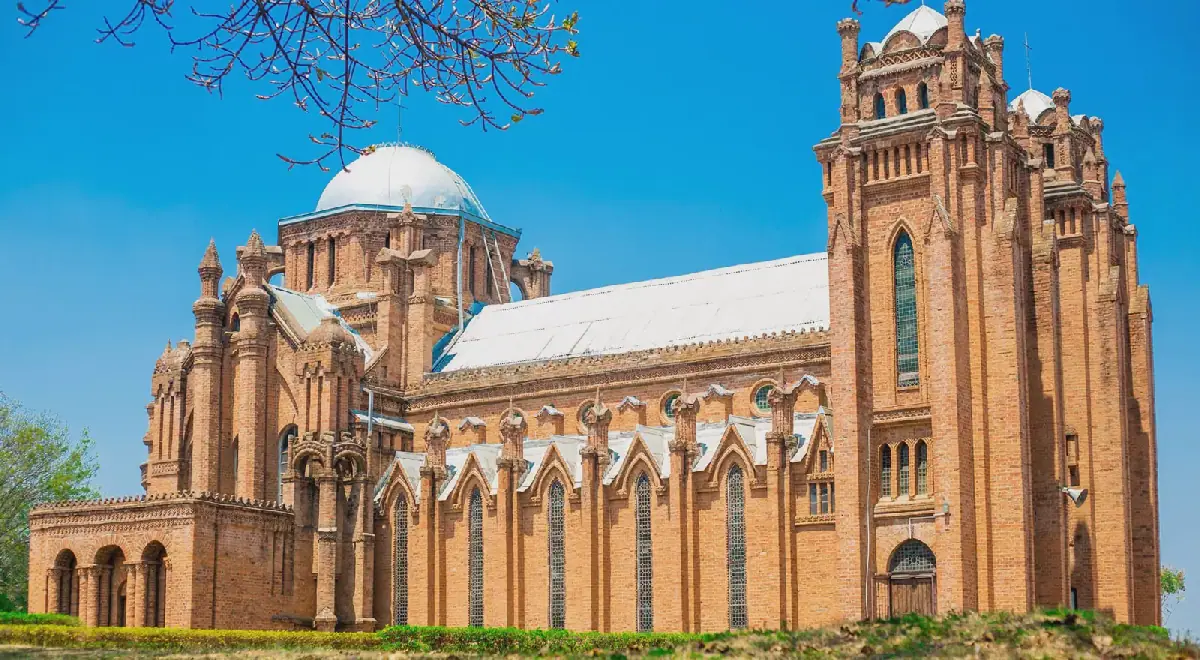
The Church of Central Africa Presbyterian (CCAP) Blantyre Synod recently celebrated its 150th anniversary, marking a significant milestone in Malawi's history. In 1876, Scottish missionaries led by Henry Henderson arrived in the Shire Highlands at the request of Dr. David Livingstone to introduce Christianity, commerce, and civilization to the region. The missionaries established the Blantyre Mission under a wild fig tree, laying the foundations for what would become the modern nation of Malawi.
The early years of the mission were marked by challenges, including disease and loss. Malaria claimed the lives of several early missionaries and their spouses. Reverend David Clement Scott, who began constructing the St. Michael and All Angels Cathedral in 1888, had never laid a brick in his life. Despite this, he persevered, sketching arches in the dirt with a stick and having masons build test arches.
The mission played a crucial role in shaping Malawi's development. It offered refuge to freed slaves and nurtured indigenous leadership, including Reverend Harry Kambwiri Matecheta, who became the first Malawian Presbyterian minister in 1911. The mission also introduced experimental tea plantations in Thyolo and Mulanje, and established legitimate trade and banking through the African Lakes Corporation.
The mission's institutions provided over 90 percent of the region's education and health infrastructure, producing many of the political thinkers who led Malawi to self-rule in 1964. However, the 150th anniversary service at the Henry Henderson Institute (HHI) grounds was marred by disruptions, including the stoning of opposition convoys and intimidation of public figures and journalists.
The incidents have been widely condemned, with Deputy Minister of Homeland Security Norman Chisale intervening to address the situation. However, the reliance on executive figures to quell crisis points has raised concerns about the effectiveness of Malawi's law enforcement institutions. A mature republic requires predictable institutions that can maintain law and order without relying on high-level political direction.
The story of the Blantyre Synod is a sacred one, and its 150th anniversary serves as a reminder of the need for Malawi to build a nation where political differences do not breed violence. The pioneers who established the mission did not brave malaria and loss so that future generations could engage in political thuggery. Instead, they hoped to build a nation where citizens can assemble safely in civic grace.
As Malawi looks to the future, its leaders are urging citizens to build a prosperous republic by promoting institutional integrity, protecting democratic freedoms, and silencing neither the press nor critical voices. The legacy of the CCAP Blantyre Synod serves as a reminder of the power of faith and community to shape a nation's development and promote peace and stability.
Key points
- The Church of Central Africa Presbyterian Blantyre Synod celebrated its 150th anniversary, marking a significant milestone in Malawi's history.
- The mission played a crucial role in shaping Malawi's development, introducing Christianity, commerce, and education to the region.
- The anniversary service was marred by disruptions, highlighting the need for Malawi to build a nation where political differences do not breed violence.