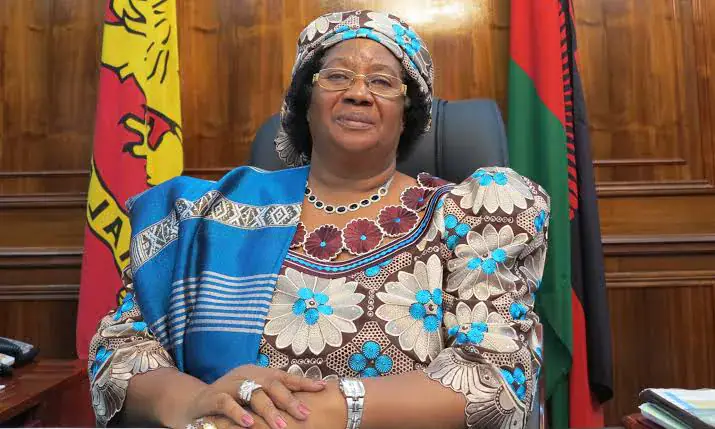
Former Malawi President Joyce Banda recently received the Broad Pool of Ideas (BPI) Foundation Lifetime Achievement Award in South Africa, recognizing her contributions to democracy. In an interview with Newzroom Africa journalist Iman Rapetti, Banda reflected on her leadership journey and women's leadership on the continent. She emphasized that leadership is a love affair, requiring a deep commitment to the people being led. Banda's award was significant, as it acknowledged her dedication to democracy and her achievements as one of Africa's few female presidents.
Banda's leadership experience was marked by significant challenges, including a struggling economy and widespread corruption. When she took office in 2012, Malawi faced severe fuel shortages, food insecurity affecting two million people, and companies operating at only 35% capacity. However, by the time she left office in 2014, the economy had grown from 3% to 6%, and companies were operating at 85% capacity. Additionally, Malawi had harvested over 3.9 million metric tonnes of food, exceeding production targets. Banda attributed her success to her willingness to take risks and fight corruption.
Fighting corruption was a major challenge for Banda's administration, with 72 people arrested for looting during her tenure. She acknowledged that taking risks and fighting corruption can have personal consequences, but emphasized that leaders must prioritize the well-being of their citizens. Banda's experience was echoed by Ngozi Okonjo-Iweala, Director-General of the World Trade Organisation, who noted that fighting corruption is a difficult but necessary task. Banda's determination to protect the people she led ultimately led to her decision to leave office.
Banda emphasized the importance of women's empowerment and leadership in Africa, highlighting the progress made in recent years. She noted that Africa has had seven female presidents, with four from the Southern African Development Community (Sadc). Banda attributed this progress to the strong network of African women leaders, including the African Women Leaders Network, which provides support and mentorship to women in leadership positions. She expressed pride in the achievements of African women, who have historically played a significant role in leadership and negotiation.
However, Banda also acknowledged the challenges that remain, including the limited representation of women in leadership positions. She emphasized that women's empowerment requires a collaborative approach, with men and women working together to create opportunities for women to take on leadership roles. Banda encouraged women to engage with their male counterparts, rather than adopting a confrontational approach, to ensure that they are given the space to participate in leadership.
Banda's experience as a leader has informed her perspective on the qualities required for effective leadership. She emphasized that leadership is about serving the people, rather than personal gain or ambition. Banda's commitment to her constituents and her willingness to take risks have inspired many, particularly women, to pursue leadership roles. Her legacy continues to inspire a new generation of leaders in Africa.
As Banda looks to the future, she remains optimistic about the prospects for women's leadership in Africa. She emphasized that African women are capable leaders, with a long history of negotiation and leadership. Banda encouraged women to continue pushing for opportunities, working collaboratively with men to create a more inclusive and equitable society. Her message of hope and empowerment serves as a reminder that leadership is within reach for women who are willing to take on the challenge.
Key points
- Former Malawi President Joyce Banda received the BPI Foundation Lifetime Achievement Award for her contributions to democracy.
- Banda's leadership experience was marked by significant challenges, including a struggling economy and widespread corruption.
- She emphasized the importance of women's empowerment and leadership in Africa, highlighting the progress made in recent years.
Reporting sources
- JB’s love story · The Nation